What's in black beans
Black beans have a better nutrition profile than most people assume. They're not a specialty item or hard to find — this is the bean that costs a couple of dollars a bag and already sits in most pantries next to the rice.
Per 100g of cooked black beans, according to the USDA FoodData Central:
- ~8g plant protein
- ~8g fiber (including resistant starch)
- ~2mg iron
- ~60mg magnesium
- ~130 kcal
That protein is plant-based — incomplete on its own. Paired with rice, though, the two complement each other. The amino acids missing from beans show up in rice, and vice versa. Rice and beans is one of the oldest combinations in the book for exactly this reason, and it's just as true whether you learned it from a Brazilian kitchen or a Cuban one.
The fiber includes resistant starch: a type that skips digestion in the stomach. It arrives intact in the large intestine and feeds beneficial bacteria there. The result is better nutrient absorption and less inflammation over time.
The iron in beans is non-heme — harder to absorb than the iron in meat. The workaround: eat it alongside vitamin C. An orange for dessert or bell pepper in the seasoning both help the absorption along.
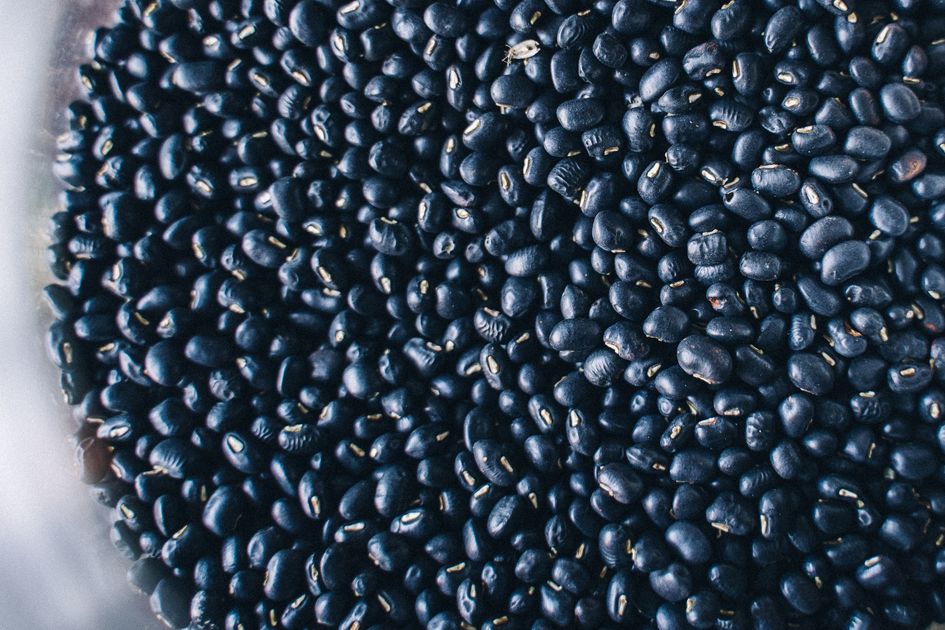
The dark skin carries a high concentration of flavonoids and polyphenols — antioxidants that fight free radicals. That's exactly what sets black beans apart from other beans nutritionally. The darker the skin, the higher the concentration of these compounds.

Photo: Ruslan Khmelevsky / Pexels
Health benefits of black beans
With that nutrition profile, the benefits are pretty direct. No hype needed — it's all in the bean already.
Gut health
Fiber regulates digestion and feeds the microbiome. Resistant starch matters especially for bacterial diversity. A diet heavy in ultra-processed food erodes that diversity over time. Beans push in the opposite direction.
Blood sugar control
Fiber slows down how fast carbohydrates get absorbed. That prevents a glucose spike after the meal. It matters if you want steady energy through the day — and even more if you deal with insulin resistance.
Cholesterol
Soluble fiber binds to LDL cholesterol in the gut and helps carry it out. It doesn't replace any medical treatment, but it's a consistent, cheap thing to have working in the background.
Iron and anemia
Black beans are one of the best plant-based iron sources you can buy at a regular grocery store. That matters especially for women of reproductive age, vegetarians, and vegans. Remember: non-heme iron needs vitamin C nearby to absorb well.
Affordable plant protein
About 8g per 100g cooked. In a 200g serving, that's 16g of protein. It's not chicken, but it's a lot more than most people give it credit for. Anyone searching for protein-rich foods usually skips right past beans — and pays more for worse options.
Antioxidants
The polyphenols in the dark skin have documented antioxidant activity. The concentration is higher in black beans than in pinto or white beans. It's not magic — it's a cumulative effect from eating them regularly over years.
One serving a week won't change anything. Daily, over years, it's the kind of thing your next bloodwork actually notices.
Black beans or pinto beans: which one?
The question comes up a lot in kitchens where both show up in the pantry. Short answer: both are good. But there are real differences worth knowing.
Black beans have more antioxidants. The dark skin points to a higher concentration of flavonoids and polyphenols — compounds that pinto beans, with their lighter, mottled skin, carry in smaller amounts. That difference is real and shows up in comparative nutrition analyses.
Protein and fiber content is similar between the two. The gap shows up in the micronutrients and antioxidants, where black beans have the edge.
Pinto beans have a milder flavor and break down into a creamier texture — that's why they're the go-to for refried beans. Black beans hold their shape better and have a more earthy, distinct flavor — they work well with cumin, bay leaf, and garlic, and they're the standard in Cuban, Mexican, and Central American bean dishes.
Which one to use? Depends on what you're cooking. If it's a purely nutritional call, black beans have the antioxidant edge. But that difference doesn't justify switching if pinto beans are already your weekly habit. Eating the bean you actually like beats eating the "healthier" one less often.
Black beans always in the pantry. Mise tells you when you're running low.
Start free →How to cook black beans at home
There's no trick to it. There is a way to get it right — and a way to ruin it.
Soak first (don't skip this step)
Soak the beans for 8 to 12 hours before cooking. Discard the soaking water. This reduces the oligosaccharides — the sugars responsible for producing gas. It doesn't eliminate it completely, but it makes enough of a difference to be worth the extra step.
In a pressure cooker
20 to 25 minutes once the pot reaches pressure. Beans already soaked, enough water to cover well. No need to measure precisely — beans absorb water and swell on their own. Result: soft beans, a thick broth.
On the stovetop
1.5 to 2 hours over medium heat with the lid on. Same soaking rule applies. It takes longer, but you get more control — you can watch the texture as it cooks and decide when to stop.
Salt goes in last
Salt added early toughens the skin. Add it only once the beans are soft — in the last 5 minutes. The texture stays consistent and the broth absorbs the seasoning better.
The base seasoning
Garlic, bay leaf, and onion: the bare minimum that turns plain beans into something worth eating. Cumin and black pepper are optional add-ons that help. Tomato after they're cooked, if you want something heartier.
Cook a big batch and freeze it
Cooked beans freeze well. Portion them into one- or two-cup containers and freeze. They keep for up to 3 months without losing quality. You'll thank yourself on a weeknight when there's no time to cook anything from scratch.
The moment you decide to cook beans is usually the same moment you realize you're out. A pantry that tracks what you have shows you what's low before you need it — no digging through the cupboard to find out.
How much black beans to eat and how often
There's no known restriction on eating black beans every day. In a reasonable portion — about a cup of cooked beans (roughly 200g) per meal — it's one of the better food habits for anyone cooking at home.
The rice-and-beans combination that shows up across Latin American and Caribbean cooking isn't a coincidence. It's efficient: low cost, complementary protein, fiber, minerals, antioxidants. The pairing that nutrition researchers took decades to "discover" as ideal was already sitting on the table in most of these kitchens for generations.
If beans give you gas often, try starting with a smaller portion and increasing gradually. The gut adapts — and soaking beforehand helps.
A reasonable portion is 150 to 200g of cooked beans per meal. More than that is a lot to eat at once. Less is fine too — but if beans are your only source of plant protein for the day, it's worth looking at the rest of your meals.
A tub of premium protein powder running $40 doesn't add much over 8g of protein per 100g of beans that cost a couple of dollars a bag. The math isn't close.
Black beans on the shopping list every week. Right next to the rice, where they belong.
Frequently asked questions about black beans
Are black beans fattening?
They run about 130 calories per 100g cooked — not a low-calorie food. But the fiber increases satiety and reduces the overall calorie load of the meal. Regular legume consumption is linked to lower body mass index in population studies. The problem is never the beans — it's whatever comes with them.
What is the difference between black beans and pinto beans?
Black beans have more antioxidants — flavonoids and polyphenols concentrated in the dark skin. Protein and fiber content is similar between the two. Black beans taste more earthy; pinto beans are milder and creamier. In practice: black beans hold their shape better in a bowl, pinto beans break down better for refried beans.
Can you eat black beans every day?
Yes. There's no known restriction on daily consumption in a reasonable portion. If you have a sensitive gut, start with smaller portions and increase gradually. Soaking before cooking and discarding the water reduces the compounds that cause gas.
How do you reduce gas from black beans?
Soak for 8 to 12 hours and discard the soaking water. This reduces the oligosaccharides responsible for intestinal fermentation. Cooking them thoroughly also helps — undercooked beans ferment more. Your gut adapts with regular consumption: people who eat beans weekly get less gas than people who eat them once a month.
Are black beans gluten-free?
Plain black beans have no gluten. If you have celiac disease, check the label on packaged versions — cross-contamination can happen depending on the facility. Seasoned canned beans can contain gluten-containing additives. Check the ingredient list.
How do you store black beans at home?
Dried: in a sealed container away from the fridge, they keep for months — check the package date. Cooked: in the fridge for up to 4 days in a covered container. In the freezer, in separate portions, for up to 3 months. They freeze well and reheat fast on the stove or in the microwave.
Black beans in the pantry.
Let's see what else is in there.
Mise connects your pantry, recipes, and shopping list in one place. You buy what you'll actually use — and you never find out mid-week that you ran out.