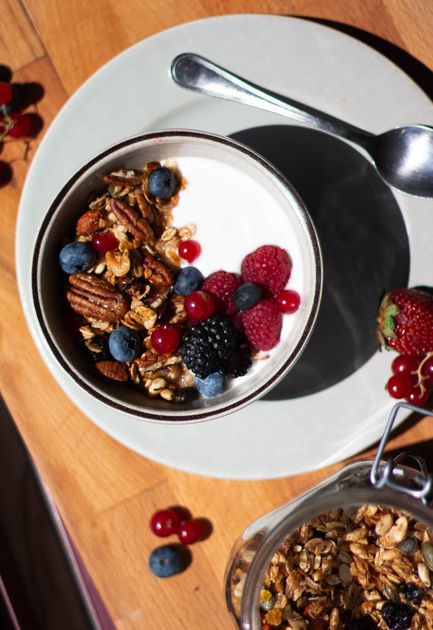

Photo: Pexels
What rolled oats are
Rolled oats are the whole oat grain (Avena sativa) processed into flat flakes. The process is simple: the groat is steamed, then pressed flat between rollers. Depending on how thin the roller sets it, you end up with old-fashioned rolled oats, quick oats, or instant oats.
That is not a label detail. The thickness changes how much beta-glucan survives the process — the fiber responsible for most of the benefits oats are known for. Less processing means more beta-glucan preserved.
Whole oat groats and steel-cut oats hold the most. Old-fashioned rolled oats sit right below. Instant oats — the packet kind — are the most processed of the bunch: convenient, but with the least of the fiber that actually matters.
Beta-glucan: the fiber behind the benefits
Beta-glucan is a soluble fiber. In the gut, it absorbs water and forms a thick gel. That gel does two things at once: it traps some LDL cholesterol before it gets absorbed, and it slows down how fast sugar enters the bloodstream.
The cholesterol effect is well documented — documented enough that the FDA approved a health claim allowing oat products to state that 3g or more of beta-glucan soluble fiber a day may reduce the risk of heart disease. This is not influencer talk. It is evidence solid enough for a regulator to sign off on the claim.
A meta-analysis of 28 randomized controlled trials found that at least 3g of oat beta-glucan a day lowered LDL cholesterol by about 0.25 mmol/L — roughly a 6% reduction. The mechanism: beta-glucan binds part of the cholesterol in the gut and carries it out before it is absorbed.
To hit the effective amount, the reference is 3g of beta-glucan a day. That is about 3 tablespoons of old-fashioned rolled oats (40g) or roughly 2 tablespoons of oat bran. One serving at breakfast covers it — there is no need to eat oats at every meal.
Other documented benefits
Cholesterol is the most studied angle. But the same beta-glucan works on a few other fronts too:
Blood sugar control
The gel that forms in the gut slows sugar absorption. Blood sugar rises more gradually after a meal that includes oats — a smaller insulin spike, and steadier energy afterward. For anyone managing type 2 diabetes or prediabetes, this matters a lot. For everyone else, it is what keeps the mid-morning energy crash from happening.
Satiety
The gel takes up space in the stomach and slows gastric emptying. A bowl of oatmeal at 8am can carry you to lunch without reaching for a snack at 10:30.
You know exactly which snack.
Gut health
Oat fiber feeds the beneficial bacteria in the gut — a prebiotic effect — and helps keep digestion regular. This works over the medium term, with consistent intake. It does not fix anything in two days.
Blood pressure and other nutrients
Regular oat consumption is linked to small reductions in systolic blood pressure. Beyond beta-glucan, oats contain avenanthramides — antioxidants essentially unique to oats with anti-inflammatory properties. They also carry magnesium, iron, zinc, and B vitamins. Oats are one of the foods high in magnesium you can pick up at any grocery store for a couple of dollars.

Photo: thea a / Pexels
Steel-cut, rolled, quick, or instant — which one to buy
All of them come from the same oat groat. What changes is processing, soluble fiber concentration, and how they behave in a pot. Grabbing the wrong bag for the wrong recipe is the easiest way to waste money on what should be a cheap staple.
Steel-cut oats
Chopped into pieces rather than flattened, so they keep the most structure and the most beta-glucan. Chewy, nutty, and slow — 20 to 30 minutes on the stove. Best for a weekend pot of oatmeal or a slow-cooker breakfast prepped the night before.
Old-fashioned rolled oats
Steamed and pressed, but not sliced thin. The middle ground: cooks in about 5 minutes, holds its texture, and keeps most of the beta-glucan intact. The most versatile of the bunch — works in oatmeal, overnight oats, homemade granola, and pancakes. If you are only buying one type, this is the one.
Quick oats
Rolled thinner and often pre-steamed for a faster cook time — about 1 minute. Creamier texture, less chew. Fine for smoothies, baking, or a rushed morning, but the extra processing means somewhat less soluble fiber per bite than old-fashioned.
Instant oats
The packet kind, pre-cooked and dried, ready in a minute with hot water. The most processed and the most convenient — and usually the one with the least beta-glucan left, especially once flavor packets add sugar on top.
Oat bran
Not a whole oat at all — it is the fibrous outer layer, milled off. The most concentrated source of beta-glucan by weight. Works well stirred into smoothies, yogurt, or soup. Its powdery texture limits its use in anything that needs structure.
How to use rolled oats in the kitchen
Oats do not need an elaborate recipe. The simplest preparations are the ones that actually stick around in a weekly routine.
Overnight oats
The most practical prep: rolled oats + milk or yogurt + mashed banana or chopped fruit. Mix in a jar, cover, and refrigerate the night before. In the morning, it is ready. Add honey, cinnamon, or dried fruit if you want. No stove needed — you make it while you eat dinner and eat it the next day.
Stovetop oatmeal
One cup of oats + milk or water + a pinch of cinnamon + medium heat for 5 minutes. As simple as it sounds. Add honey or maple syrup at the end if you want it sweet.
Homemade granola
Rolled oats mixed with honey, olive oil, nuts, and shredded coconut, spread on a baking sheet and baked for 20 minutes at 350°F (180°C). The result beats anything from a box — and you control the sugar. For the full breakdown of ratios and variations, see the homemade granola guide.
Quick pancakes
Two tablespoons of oats + 1 egg + 1 mashed banana. Blend it or mix by hand with a fork. Cook in a nonstick pan. It is not a French crepe — it is the pancake for someone with 10 minutes before work.
In soups and stews
Quick oats thicken broth naturally. Stir 2 tablespoons into a creamy soup in place of cornstarch. It does not change the flavor, just the texture.
Oats in the pantry, list always up to date. Mise handles that part.
Start free →How much to eat per day
The reference dose for a cholesterol effect is 3g of beta-glucan a day. In practice, that means:
- 3 tablespoons of old-fashioned rolled oats (about 40g)
- or roughly 2 tablespoons of oat bran (about 30g)
There is no need to split it across multiple meals. One serving a day, eaten consistently, produces the documented effects. The cholesterol effect starts to show up after 4 to 8 weeks of consistent intake — not after one week.
Oats have about 380 calories per 100g — a calorie density similar to rice. They are not a "free" food. But the satiety they create tends to offset that: you eat less over the following hours.
Oats and the pantry
Rolled oats are one of those staples that make sense to always have on hand — right alongside rice, beans, olive oil, and pasta. They keep for a long time, cost little, and cover everything from breakfast to a light dinner.
The only catch is you usually notice they are gone right when you need them. Monday morning, no oats for overnight prep. Oats deserve to be a fixed item on the list — the kind you restock before it actually runs out, not after.
To store them well: rolled oats in a sealed container, away from the fridge, last up to 12 months. Once opened, check that they do not smell rancid — a sign of oxidation. If you want a more systematic way to organize the grains and cereals in your kitchen, the quinoa guide covers a similar staple that belongs in the same rotation.
Alongside other functional grains like quinoa, oats round out the basic stock of a kitchen that actually runs through the week. The difference is that oats cover more breakfasts — and cost a lot less per pound.
Frequently asked questions about rolled oats
Are rolled oats fattening?
Not on their own. Oats have about 380 calories per 100g, but beta-glucan creates strong satiety — you stay fuller for longer afterward. A regular serving does not add more weight than other carbs. The usual problem is what gets added on top: too much sugar, store-bought granola, or heavy honey.
Are rolled oats gluten-free?
Oats themselves do not contain gluten. But they are frequently processed in the same facilities as wheat, which creates a risk of cross-contamination. If you have celiac disease or a gluten sensitivity, buy oats with a certified gluten-free label — they go through separate processing and packaging from wheat.
Can I eat rolled oats every day?
Yes. Daily intake is safe and is exactly what makes beta-glucan effective for cholesterol control — the effective dose is 3g of beta-glucan a day, about 3 tablespoons of old-fashioned rolled oats. There is no benefit to eating more than that. The effect builds up consistently over weeks.
Do raw and cooked oats have the same benefits?
Beta-glucan works whether the oats are raw or cooked. Overnight oats — soaked raw in the fridge — and stovetop oatmeal produce a comparable effect on satiety and cholesterol. The difference is texture and prep time, not effectiveness.
What is the difference between rolled oats, quick oats, and steel-cut oats?
They are the same grain, processed differently. Steel-cut oats are chopped rather than flattened, so they keep the most structure and beta-glucan, but take the longest to cook. Old-fashioned rolled oats are the middle ground — quicker to cook, still hold on to most of the fiber. Quick oats are rolled thinner and partially pre-cooked, so they cook fast but carry less soluble fiber per serving.
Do rolled oats work on a low-carb diet?
Oats have carbs — they are not a low-carb food. But the glycemic index is low thanks to beta-glucan: sugar is absorbed more slowly, without a sharp insulin spike. Strict keto has no room for oats. Moderate carb-controlled diets can include a measured portion (1 to 2 tablespoons).
Oats on the list.
Never out of the pantry again.
With Mise, rolled oats stay a fixed pantry item. Once they run out, they show up automatically on the shopping list. No surprise on Monday morning.