
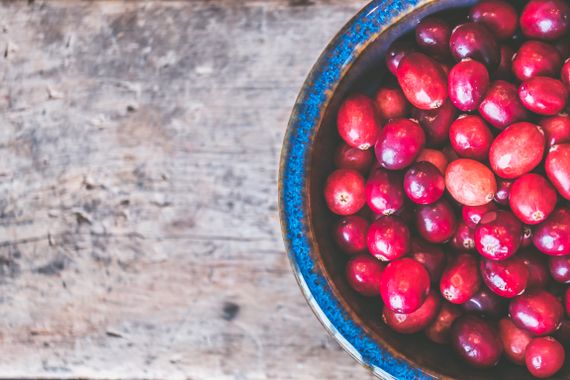
Photo: Jessica Lewis / Pexels
What cranberry actually is
Cranberry (Vaccinium macrocarpon) is a small red berry native to North America — bogs in New England and eastern Canada, mostly, the same flooded fields you see farmers wade through in waders every fall around Thanksgiving. Unlike a lot of ingredients that get imported and mythologized somewhere else, this one is about as North American as produce gets.
Fresh, it is shockingly sour. Not a "pucker a little" sour — more of a "why would anyone eat this raw" sour. That is exactly why almost nobody buys it fresh outside the few weeks around the holidays. What actually sells year-round is dried (sweetened, chewy, looks like a red raisin), juice (usually blended with something sweeter to make it drinkable), and supplement capsules.
Nutritionally, cranberry carries vitamin C, fiber, and a set of polyphenols — mainly proanthocyanidins (PACs), flavonoids, and quinic acid. That combination is what the entire UTI conversation is actually about, and it is worth understanding before you buy anything with "cranberry" printed in bold on the label.
Does cranberry actually help with UTIs
The claim is not folklore — there is a real mechanism behind it. PACs interfere with how E. coli bacteria grip the wall of the bladder and urinary tract. Less grip, less chance of an infection taking hold. That is the whole story, and the specificity matters: cranberry does not kill bacteria and it does not treat an infection you already have. Mid-UTI, that is an antibiotic conversation with a doctor, not a juice-aisle decision.
Research on people with recurrent UTIs — repeat cases, not a one-off — shows a real, if modest, drop in risk with regular cranberry use: figures in the 25 to 50% range depending on the study and the form tested. The effect is more consistent in women with a history of recurring infections than in the general population, and it depends on taking it regularly, not once when symptoms start.
One detail that gets buried in marketing: dried cranberries carry roughly three times the PACs per serving compared to the sweetened juice cocktail sitting next to them on the shelf. That does not make dried cranberries a treatment — it just means the format on the box matters more than the word "cranberry" printed on it.
What cranberry will not do: cure an active infection, detox anything, or replace medical care. It is one piece of a prevention routine for people who already deal with recurring UTIs — not a cure-all, and not something to gamble on if you are actually sick right now.
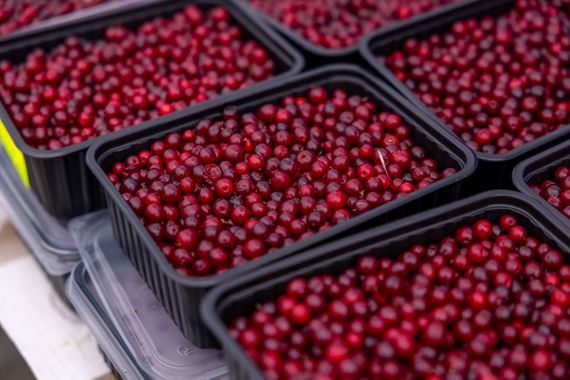
Photo: Sergei Starostin / Pexels
Fresh, dried, juice, or supplement: what actually changes
Cranberry shows up in four forms at any grocery store, and they are not interchangeable.
Fresh
Rare, seasonal (late fall), and brutally tart. Almost nobody eats it plain. If you do find it, it is built for cooking down into a sauce — the natural pectin means it thickens on its own with a bit of sugar and water, no extra help needed.
Dried
The one you will actually see year-round. Almost every brand sweetens it during drying, which is why it tastes closer to a tangy raisin than the fruit it started as. Read the label if sugar matters to you — some brands use apple juice concentrate instead of straight sugar, which changes the ingredient list but not the calorie count by much.
Juice
Comes in two very different products: unsweetened ("100% juice," intensely sour, usually cut with another juice to be drinkable) and cranberry juice cocktail, which is mostly sugar with a small percentage of actual cranberry in it. Check the ingredient list — cranberry should be near the top, not buried after three other juices.
Supplement (capsule or extract)
A concentrated dose of the same PACs, without the sugar of dried fruit or juice cocktail. This is the form most UTI-prevention studies actually use, since it standardizes the dose in a way food does not. PAC content varies by brand — there is no universal number to look for, so check what the label actually states.
How to actually use it in the kitchen
Dried cranberries are the practical option here, and the rule is simple: use them anywhere you would use raisins. Same texture, same role in a dish, more tart edge. That means:
- Oatmeal or granola at breakfast — cuts the sweetness with a bit of acidity
- Salads with bitter greens — arugula, watercress — the tartness plays well against the bitterness
- Trail mix or a nut mix for an afternoon snack
- Stuffing or rice pilaf next to poultry — same slot raisins usually fill
- Baked into muffins, scones, or quick bread
Unsweetened juice works blended into a smoothie or reduced into a glaze for pork — the acidity cuts through the fat the same way a squeeze of citrus would, and a bit of mustard and honey rounds it out.
On portions: a couple of tablespoons of dried cranberries per serving is plenty. It is not an ingredient that needs volume to register — and the sugar in the dried version adds up fast if you treat the bag like trail mix instead of a topping.
You do not remember to plan meals around what is already in the pantry. Mise does.
Start free →Is cranberry worth keeping around
Depends on what you are actually after.
If the goal is a legitimate antioxidant-rich ingredient sitting in the pantry that is genuinely easy to fold into food you already eat — granola, salad, trail mix — it earns its spot. Dried cranberry keeps for months in a sealed container and does not ask you to change your routine to use it.
If the goal is specifically preventing recurrent UTIs, that is a conversation for your doctor, not a supplement-aisle decision made alone. The evidence is real, but the right form and dose depends on your history, and a healthcare provider can tell you that better than a label can.
If you are buying it because it is a "superfood" that is supposed to fix something vague, it is probably headed for the back of the pantry — next to whatever chia seeds got bought in a similar mood and never touched again. An ingredient only sticks around if it fits into something you already cook.
It is not a staple that belongs on every shopping list — but if granola, bitter-greens salads, or trail mix are already part of your week, dried cranberry is a reasonable add. It lasts, and it is not expensive for what it is.
Your pantry does not need another health fad gathering dust. It needs the cranberry to actually get used before the bag goes stale.
Frequently asked questions about cranberry
Does cranberry actually help with UTIs?
Cranberry contains proanthocyanidins (PACs), compounds that make it harder for bacteria — mainly E. coli — to stick to the bladder wall. Studies on people with recurrent UTIs show a real, if modest, drop in risk with regular use. It does not treat an infection you already have; that requires a prescribed antibiotic. Think prevention, not cure.
Do cranberry supplements work better than juice?
Supplements deliver a concentrated, standardized dose of PACs without the added sugar found in juice cocktail or dried fruit, which is why most clinical studies use extract or capsules. Juice can work too, but check the label — many bottled versions are mostly sugar with a small percentage of actual cranberry.
Are dried cranberries healthy, or just candy with a health halo?
Somewhere in between. Dried cranberries keep the fiber and polyphenols of the fresh fruit, but almost every brand adds sugar during drying, which raises the calorie count. In small amounts — a couple of tablespoons on oatmeal or salad — they are a reasonable choice. Eaten by the handful like candy, the added sugar adds up fast.
What is the difference between fresh, dried, and juiced cranberries?
Fresh is intensely tart and mostly used to cook down into a sauce. Dried is sweetened during processing and works like a tangy raisin. Juice comes either unsweetened (very sour, usually blended with another juice) or as a sugary cocktail with a small percentage of actual cranberry. Dried cranberries carry roughly three times the PACs per serving compared to juice cocktail.
Can you eat cranberries every day?
Yes, in reasonable amounts. A couple of tablespoons of dried cranberries a day, folded into a meal, is enough to get the antioxidant benefit without overdoing the added sugar in the dehydrated version.
Are cranberries gluten-free?
The fruit itself has no gluten. Processed dried cranberries can carry cross-contamination risk depending on how they were manufactured, so check the label if you have celiac disease or gluten sensitivity.
Cranberry's in the pantry.
The list remembers it exists.
Mise connects your pantry, recipes, and shopping list in one place. The cranberry you bought with good intentions actually gets used — instead of going stale behind the oats.