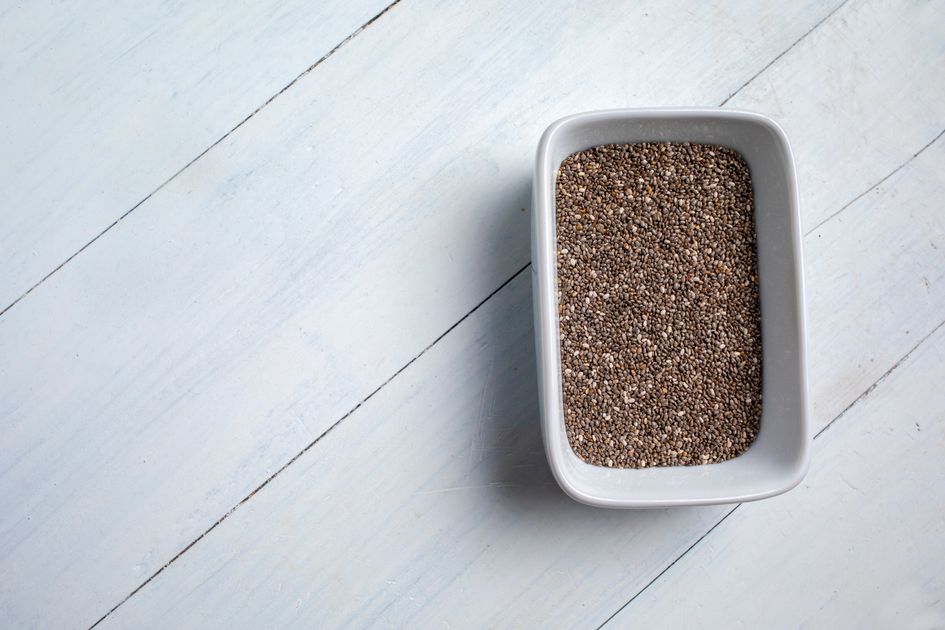

Photo: Anna Tarazevich / Pexels
What chia seeds are
Chia (Salvia hispanica) is a seed from the sage family, cultivated for thousands of years in Mexico and Guatemala. The Aztecs called it "chia" — Mayan for strength or energy — and used it as fuel for long marches and battles. The plant produces small oval seeds ranging from gray to black or white, depending on the variety.
The flavor is neutral. Almost undetectable in any dish. That is both an advantage and a limitation: it disappears into any recipe without changing the taste, but it also doesn't bring any flavor of its own to the table. Nobody eats chia for the taste.
What makes chia distinctive is how it behaves in liquid. The seeds have an outer layer of soluble fiber (mucilage) that absorbs water fast — up to 12 times its own weight. The result is a gel that coats every seed. That gel isn't a culinary trick — it's pure fiber, and it's responsible for most of the fullness and digestive effects people report.
Chia went from niche health-food item to mainstream grocery staple roughly over the past decade, riding the "superfood" label. That label oversells it — no single food fixes everything. But chia's nutrition profile is genuinely strong, especially next to other grains and seeds.
Chia and protein: the real numbers
Yes, chia has protein — and it's a more complete protein than most plant foods. Per 100g, it carries about 17g of protein and includes all nine essential amino acids, which puts it in a small club of plant-based complete proteins alongside quinoa and soy.
The important detail: 100g of chia is a lot to eat in one sitting. A realistic serving is 1-2 tablespoons (15-30g), which delivers roughly 2.5-5g of protein. That's a meaningful contribution to your daily intake, but nowhere near enough to be the main protein source of a meal. Chia complements — it doesn't replace chicken, eggs, beans, or tofu.
The bigger story is two other nutrients. First, fiber: 34g per 100g. That beats oats (10g) and flaxseed (27g). Two tablespoons alone gets you about 10g of fiber — roughly a third of the daily recommendation for adults. Second, omega-3: 17g per 100g, almost all of it as ALA (alpha-linolenic acid), the plant form of omega-3.
One caveat on the omega-3 front: ALA has to be converted into EPA and DHA by the body to have the same effects as fish-based omega-3. That conversion is inefficient — estimates put it at only 5-15% of ALA converting to EPA, and less than 1% to DHA. Chia is a solid boost for a diet low in fish, but it doesn't replace marine omega-3 for anyone who needs therapeutic doses.
Chia is also a strong source of calcium (631mg per 100g — more than milk), magnesium, phosphorus, and iron. Phytates in the seed reduce how well those minerals are absorbed, but the raw quantity is high enough that a meaningful share still gets through.
What chia is actually good for
The list of benefits attributed to chia is long. Some are well supported. Others are hope dressed up as science. Here's what actually holds up:
Fullness. The gel chia forms in the stomach slows gastric emptying. You stay full longer after eating. Studies on people who added chia to breakfast reported less hunger before lunch. The effect is real but modest — it's not a weight-loss solution, it's a supporting tool.
Digestion. Chia's soluble fiber feeds gut bacteria in the large intestine (a prebiotic effect) and supports regularity. But there's a condition attached: water. Without enough hydration, chia can have the opposite effect — constipation, because it absorbs whatever liquid is available in the gut. Practical rule: drink at least a glass of water after eating dry chia.
Blood sugar. The gel slows carbohydrate absorption, helping blunt post-meal glucose spikes. Particularly useful for people with insulin resistance or type 2 diabetes. The effect is more pronounced when chia is eaten alongside or right before a meal.
What chia doesn't do: it doesn't melt fat on its own, doesn't cure disease, and doesn't replace a varied diet. The "superfood" label earns what fiber earns. Nothing more.
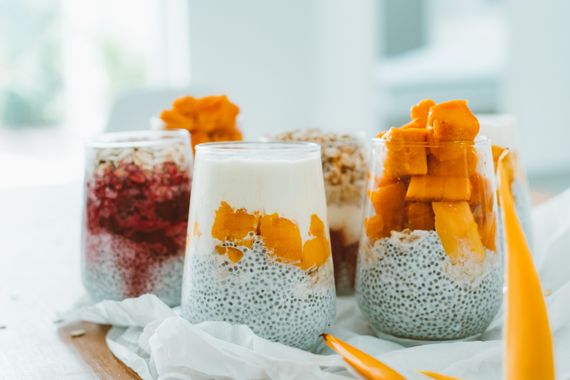
Photo: ROMAN ODINTSOV / Pexels
Chia vs. flaxseed: which one to buy
The two seeds sit side by side on the same shelf, have similar nutrition profiles, and cause the same confusion. The practical difference is about use — not which one wins.
Chia: no grinding needed, forms a gel automatically, neutral flavor. Works straight in yogurt, smoothies, and pudding. Instant hydration. Effortlessly versatile.
Flaxseed: needs to be ground to release its nutrients — whole flaxseed mostly passes through the gut undigested. Has a slightly nutty flavor. Works better in bread, baked goods, and salad dressings, where texture and taste actually contribute.
If you're picking just one: chia is more practical for everyday use. Sprinkle it, hydrate it, done — no grinder, no extra prep. If you already use flaxseed and want to diversify, the two work well together — and flaxseed oil is another way to get the omega-3 without the seed texture at all.
Nutritionally, chia has more fiber and more calcium. Flaxseed has more lignans (compounds with mild estrogenic activity) and a flavor that actually adds something to a recipe. The choice comes down to convenience, not technical superiority.
How to use chia in the kitchen
Chia's versatility is real, but most people never go past stirring it into yogurt — and that's a perfectly fine way to eat it. For anyone who wants to go further, here are the formats that actually work:
Chia gel. 1 tablespoon of chia + 3 tablespoons of water. Stir and wait 15-20 minutes. The result is a translucent gel that replaces eggs in vegan baking (1 tablespoon of gel = 1 egg, in cakes and pancakes) or works as a thickener in smoothies and soups. Makes enough to keep in the fridge for up to 5 days.
Chia pudding. 3 tablespoons of chia + 1 cup of milk (dairy or plant-based). Stir well, wait 5 minutes, stir again so it doesn't clump, then refrigerate for at least 4 hours — or overnight. Top with fruit, granola, honey, or eat it plain. Firm, mousse-like texture. Cheap, simple, and holds up well in the fridge.
Straight on top. Yogurt, fruit salad, oatmeal, smoothies. No prep needed. Works fine with 1-2 tablespoons unsoaked, since the small amount isn't enough to cause any issue — especially if you're already drinking liquid alongside it.
In baked goods. Bread, cake, muffins, pancakes — add 1-2 tablespoons per recipe, mixed in with the dry ingredients. It adds fiber and nutrients without changing the flavor. It doesn't replace flour structurally, but it complements it.
One texture note: dry chia sitting in a fresh, dressed salad for too long can make the greens go soggy. If you're mixing it in, add it right before serving.
How to buy and store chia seeds
Chia is available at pretty much any grocery store, in the cereal, grains, or natural foods aisle. Natural foods stores tend to carry a wider variety, but standard supermarket chia is perfectly fine for everyday use.
Typical price: around $6-10 for an 8-12oz (200-350g) bag at a regular grocery store. Buying in bulk (1lb/450g or more) online or at a warehouse store brings the per-gram cost down significantly. Black and white chia have essentially identical nutrition profiles — the difference is purely visual.
What to check on the label: declared origin (Peru, Argentina, and Mexico are common exporters), expiration date, and no added ingredients. Pure chia has one ingredient: chia. Be cautious with "seed blend" products if the ratio isn't clearly stated.
How to store it: a sealed container, out of light, away from heat and moisture — especially away from the stove. In the pantry, it keeps for up to 2 years unopened and about 1 year after opening without losing quality. No refrigeration needed. If the seeds feel damp, clumped, or smell rancid, toss them.
Chia is one of the few pantry items you buy rarely and that takes up almost no space. A 1lb (450g) bag lasts most people weeks — which makes buying the larger size worth it.
Frequently asked questions about chia seeds
Do chia seeds make you gain weight?
Chia is calorie-dense — 100g has about 486 calories, most from fat. But a typical serving is 1-2 tablespoons (15-30g), which works out to roughly 70-140 calories. What helps with weight management is the fiber: the gel chia forms in the stomach increases fullness and slows digestion. In reasonable amounts within a balanced diet, chia does not cause weight gain.
How much chia can you eat per day?
The most-studied dose is 15-30g per day — 1-2 tablespoons. Above that, the extra fiber can cause digestive discomfort, especially without enough water. Start with 1 tablespoon and see how your body reacts before increasing.
Can you eat chia dry, or do you need to soak it first?
You can eat it dry, but soaked is safer. Dry chia absorbs liquid in your stomach — without enough water alongside it, that can cause discomfort. Soaked, the fiber is already activated and absorption is more efficient. For 1 tablespoon on yogurt, dry is fine. For larger doses, soak it first.
Are chia seeds gluten-free?
Pure chia has no gluten. Cross-contamination can happen if it's processed on shared equipment with wheat. If you have celiac disease, check for a certified gluten-free label. For most people, this isn't a concern.
Are chia and flaxseed the same thing?
No. Different seeds with similar profiles but different uses. Chia needs no grinding, forms a gel, has a neutral flavor. Flaxseed needs to be ground to release its nutrients, and has a nutty flavor. For smoothies and pudding, chia is more practical. For bread and baked goods, flaxseed brings more character.
Do chia seeds lose nutrients when heated?
Some antioxidants and part of the omega-3 content can decrease with heat. Chia works best in cold preparations: pudding, yogurt, smoothies, salad. Baked into cakes and pancakes, it still delivers fiber and minerals — not a total loss, just a smaller payoff.
Does your pantry know how much chia you have left?
With Mise, you track your pantry, build your shopping list, and never come home from the store without what you need.
Start free