
Photo: Pexels / Pexels
What is garlic
Garlic isn't a root and it isn't a tuber — it's a bulb. The plant grows underground and forms a head made up of individual cloves, each wrapped in a thin skin, with a papery outer layer holding the whole thing together.
The compound behind the smell and the flavor is allicin. It doesn't exist in a whole clove — it only forms once you cut, crush, or chop the garlic. Until then, the precursor compounds sit separated inside the cell walls. Physical damage is what triggers the reaction, which is why minced garlic tastes sharper than sliced garlic. More cells broken, more allicin released.
Garlic is native to Central Asia and has been part of human cooking for at least 5,000 years. It shows up in some form in nearly every cuisine on the planet — Italian, Chinese, Indian, Mexican, Korean, you name it. Along with onion, it's the starting point for the majority of savory cooking, everywhere.
One clove weighs about 3 to 5 grams and has fewer than 5 calories. Whatever it does to a dish, it isn't doing it through macros.
Types of garlic
Grocery stores mostly stock one type of garlic and call it a day, but there's more variety than the produce aisle lets on — and knowing the difference changes how you cook and how long a bulb lasts in your kitchen.
Softneck garlic
The kind you'll find in almost every supermarket. No hard central stem, which lets the plant produce more cloves per head — often 12 to 20 — in tighter, overlapping layers. It stores longer than hardneck varieties, sometimes 6 months or more in the right conditions, which is exactly why it dominates commercial supply.
Hardneck garlic
Grows a stiff central stalk (the “neck”) that produces fewer, larger cloves arranged in a single ring — usually 4 to 12 per head. Flavor tends to run bolder and more complex than softneck. It also produces scapes, the curly flower stalks, which are edible and taste like a milder, greener version of garlic. The tradeoff: it doesn't store as long, closer to 3 to 4 months.
Elephant garlic
Not actually garlic — it's a relative of the leek that just looks like an oversized garlic bulb. Cloves can be the size of a whole regular garlic head. The flavor is much milder, closer to a mild onion than true garlic. Good for roasting whole, not a real substitute when a recipe wants garlic's actual punch.
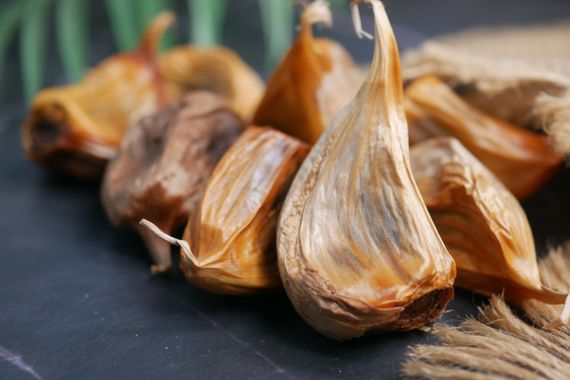
Black garlic
Regular garlic aged for weeks under controlled heat and humidity until it turns black and syrupy. The process converts the sharp, pungent compounds into something sweet and tangy, almost like balsamic vinegar with an umami backbone. No raw bite at all. Used in sauces, dressings, and spread straight onto bread.
Pre-minced, paste, and jarred garlic
Convenience products — jarred minced garlic in oil or water, garlic paste, garlic powder. Real time-savers, but the flavor profile isn't the same as fresh. Allicin breaks down fast once it's processed, so jarred minced garlic tastes noticeably flatter than garlic you mince yourself five minutes before cooking. Fine as a backup, not a first choice.
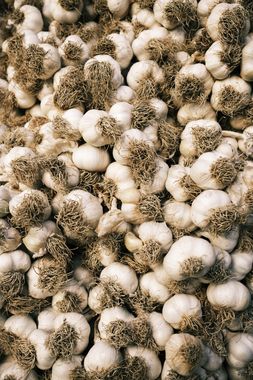
Photo: Pexels / Pexels
How to use garlic in cooking
How you cut garlic changes what it does in the pan. Mincing, slicing, crushing, and leaving it whole are not interchangeable techniques — they change how much allicin gets released and how the flavor behaves under heat.
Minced or crushed
The default for most sautéed dishes. The more you break down the clove's structure, the more allicin gets released and the sharper the flavor. One trick: smash the clove with the flat side of a knife before mincing — it loosens the skin and speeds up prep. Over medium heat, 30 to 60 seconds is enough before it starts to burn.
Sliced
Milder flavor, more texture. Good for sautéing greens, finishing a pasta dish, or frying in oil to make a garlic-infused oil. At high heat, thin slices turn golden and crisp fast — but the line between golden and burnt is thin, and burnt garlic turns bitter enough to ruin the whole dish.
Whole
Tossed into the pan unpeeled, garlic releases flavor slowly. Works well in long braises, stocks, and roasts. After enough time in the oven, a whole head turns soft and almost sweet — roasted garlic is basically a different ingredient, a spreadable paste that's good on bread, stirred into mashed potatoes, or blended into a sauce.
Raw
Salads, guacamole, tahini sauce, anything finished cold. The flavor is sharp — use it sparingly. One trick that takes the edge off without cooking it: soak minced garlic in lemon juice for 10 minutes before adding it to the dish. The acid mellows the bite without killing the aroma.
Garlic powder
The convenience option. Dissolves cleanly into marinades and dry rubs, though it doesn't caramelize the way fresh garlic does and lacks the same depth. Use it when fresh isn't on hand or when a recipe needs an even, grit-free texture. Rough conversion: 1 fresh clove is about ¼ teaspoon of garlic powder.
Garlic in the pantry, list built without thinking about it. Mise handles it.
Start free →What the science says about garlic's benefits
Garlic has been studied more than almost any other kitchen ingredient. Some claims hold up well. Others are still open questions. Here's what's actually established:
Heart health
This is the area with the strongest evidence. Review studies link regular garlic intake to modest reductions in systolic blood pressure and LDL cholesterol — typically a few points, not a dramatic swing. It doesn't replace medication, but it's a reasonable dietary habit. The main driver is allicin, which inhibits enzymes involved in cholesterol synthesis.
Antimicrobial activity
Allicin has documented antimicrobial activity in lab studies — it inhibits the growth of a range of bacteria and fungi in vitro. That doesn't mean garlic replaces antibiotics in real life. But it explains why garlic has been used as a preservative for centuries, and where the old folk belief that it “fights off” illness actually comes from.
Antioxidant properties
Garlic contains compounds that reduce cellular oxidative stress, which contributes to the anti-inflammatory effects seen in some studies. Aged garlic extract — garlic fermented over weeks — has a higher concentration of antioxidants than fresh garlic, which is why it's the form most often used in supplements.
What's not proven yet
Cancer treatment, detox claims, miracle cures — there's early, preliminary research in some of these areas, but nothing conclusive. Garlic doesn't need the hype. It has real, well-documented benefits, and that's plenty of reason to keep it around.
How to store garlic so it lasts
Whole, unpeeled, in a cool spot with decent airflow — that's the baseline. No fridge for a whole head; cold and humidity speed up sprouting and mess with the texture. In a basket, a bowl, or a ceramic garlic keeper, a bulb lasts weeks without any special effort.
Peeled cloves
Loose, peeled cloves in a sealed container in the fridge keep for about a week. After that they start drying out and losing flavor. To stretch it further, cover them in olive oil — the garlic-infused oil left over is good for cooking too.
Minced garlic
Lasts about 3 days in the fridge in a sealed container. Allicin starts breaking down soon after the clove is cut, so the flavor fades fast. For regular cooking, mincing small batches right before you need them beats prepping a big batch in advance.
Sprouted garlic
Not trash. The green sprout in the center turns bitter — cut it out before using. The rest of the clove works fine. Sprouted garlic has a slightly milder flavor than fresh, but it still holds up in a sauté or a roast.
Freezing garlic
Blend peeled cloves with a little olive oil and freeze in an ice cube tray. Each cube is roughly one tablespoon of minced garlic. Straight from the freezer to the pan, no thawing needed. Texture changes after freezing, so it's not for eating raw once thawed — but for cooked dishes, it works well for up to 3 months.

Photo: Pexels / Pexels
Garlic on your shopping list
Garlic is one of the items people forget most often — not because it's rare, but because it's cheap, small, and feels like it should last forever. It doesn't. A head disappears faster than you'd think once you're cooking most nights.
One head of garlic has 10 to 14 cloves on average. Use 2 cloves a meal and cook 5 nights a week, and a head lasts under 2 weeks. Cook for a family of four, and it's gone within the week. Putting garlic on the list every single week isn't overkill — it's just accurate.
For anyone who cooks with any kind of system, tracking garlic in your pantry is more useful than it sounds. You know exactly how many heads you have, when you're about to run out, and you don't end up mid-recipe on a Thursday night with an empty pan and no garlic.
One simple approach: buy 3 to 4 heads at a time when the price is decent. Whole, unpeeled garlic keeps well for 3 weeks without any special care. Unlike leafy greens or delicate produce, there's basically no risk of it going bad before you get to it.
Garlic belongs on any solid shopping list — right next to onion, since together they show up in almost everything you'll cook this week. Run out of one and the recipe changes. Run out of both and you're improvising, and improvising doesn't always go well.
You'll never forget garlic on the way home again. Unless you forget to check the list.
Frequently asked questions about garlic
Is raw garlic better than cooked garlic?
For allicin — garlic's main active compound — yes, raw or lightly processed is more effective. Heat breaks allicin down fast. One trick helps: mince or crush the garlic and let it sit for 10 minutes before cooking. That gives allicin time to form and makes it more heat-stable. Cooked garlic still has benefits, just at a lower concentration.
How many cloves of garlic a day is safe?
For most adults, 1 to 2 cloves a day is a reasonable amount to get the benefits without stomach discomfort. Larger amounts can cause burning or irritation, especially on an empty stomach. More isn't automatically better — there's no scientifically established magic dose.
Does garlic powder work as well as fresh garlic?
For flavor, it's a partial substitute — milder and with a different profile. For benefits, it's less efficient because drying reduces the active compounds. In a pinch: ¼ teaspoon of garlic powder is roughly equivalent to 1 fresh clove. Fresh always delivers more.
Why does garlic turn blue-green when you cook it?
A reaction between the sulfur compounds and amino acids in the bulb, triggered by high heat or acid. It doesn't mean it went bad or turned toxic — it's normal chemistry. The flavor can turn slightly more bitter. To avoid it, cook over medium heat with oil that's still warm, never in an overheated pan.
How do you get garlic smell off your hands?
Rub your hands on any stainless steel surface — a spoon, the sink, or a stainless soap bar — under cold water for a few seconds. The metal neutralizes the sulfur compounds. Regular soap barely helps, since the odor sits in your skin's pores. Stainless steel gets rid of almost all of it.
Can you freeze garlic?
Yes. Blend peeled cloves with olive oil and freeze in an ice cube tray. Each cube equals about 1 tablespoon. Straight from the freezer to the pan, no thawing needed. Skip it raw once thawed — the texture changes. It holds up well for up to 3 months.
A pantry that remembers.
Let Mise handle it.
Mise connects your pantry, recipes, and shopping list in one place. Garlic doesn't run out without warning — you'll know it's running low before you're stuck without it.