

Photo: TBD Traveller / Pexels
What to buy on day one (top priority)
Before anything about how the place looks, there's level zero: what you need to make it through the first night. Without these, nothing else matters yet.
Most people forget at least one essential in the chaos of moving day. Toilet paper is the most common miss. Runner-up: nobody remembers a shower curtain until they're standing in the tub holding one.
The survival kit
- Bedding: sheets, a pillowcase, and at least one pillow per person
- Bath towel — one per person
- Minimal toiletries: toilet paper, soap, toothpaste, and a toothbrush
- Survival kitchen: one large pot, one pan, plates, cups, and basic utensils
- Starter pantry: eggs, coffee, bread — enough that you're not stuck ordering delivery right away
- Basic cleaning: dish soap, a sponge, and trash bags
Everything not on this list can wait. The couch can wait. The floating shelf can wait. Toilet paper can't.

Photo: Vidal Balielo Jr. / Pexels
Room by room: kitchen
The kitchen needs more items than any other room — and it's the easiest one to underestimate. You remember the pot. You forget the can opener. You remember the coffee. You forget the mugs.
Cookware and tools
- Large pot + medium pot
- Frying pan
- Kettle
- Cutting board
- Chef's knife + a couple of smaller knives
- Ladle, spatula, and wooden spoon
- Colander
- Plates (6), bowls (6), glasses (6)
- Flatware — 6 full sets
- Can opener and bottle opener
Basic appliances
- Blender
- Coffee maker
- Microwave (if it doesn't come with the unit)
Starter pantry
This isn't the full month's grocery run — it's the minimum to have something to eat while you're still unpacking boxes. Once the kitchen is up and running, that's when you build out a complete pantry.
- Olive oil or cooking oil, salt and pepper
- Garlic and onion
- Rice, canned beans, and pasta
- Tomato sauce
- Coffee, sugar, milk, and eggs

Photo: paulo remorini / Pexels
Room by room: bedroom and bathroom
Two sheet sets per bed make a real difference. When one is in the wash, the other is already on the bed. It sounds obvious, and it's exactly the kind of thing everyone forgets to buy in duplicate.
Bedroom
- Sheet sets — 2 per bed (one in use, one spare)
- Pillows — 2 per person
- Comforter or duvet
- Hangers — start with 20, you'll need more
Bathroom
- Bath towel — 2 per person
- Hand towel — 2 per person
- Bath mat
- Shower curtain, liner, and rings — apartments rarely include one
- Shampoo, conditioner, soap, toothpaste, deodorant
- Toilet paper — buy more than you think. You'll use it.
A detail almost everyone misses: a plunger and a toilet brush. It sounds unnecessary — until it isn't, and the nearest store closes in twenty minutes.
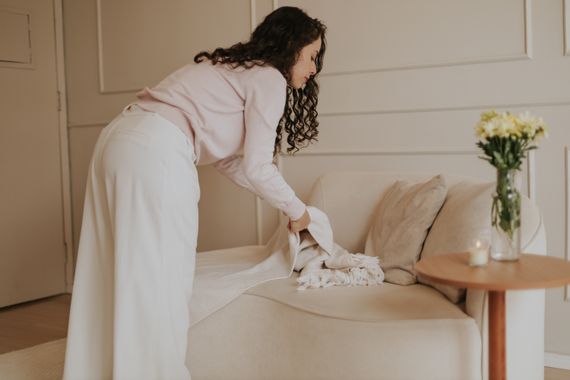
Photo: Letícia Alvares / Pexels
Room by room: living room
The living room is where people overspend on impulse and need the least right away. The couch can wait a week. What can't wait:
- Power strips or extension cords — a new place rarely has enough outlets where you actually need them
- Light bulbs — check the wattage and base type before buying. Every fixture is a little different.
- Curtains or blackout shades — at least in the bedroom. The first sunrise straight in your face at 6 a.m. settles any debate about priority.
Living room styling, artwork, and comfort items: not week two. Wait until you know where everything is actually going to go.
Cleaning and laundry
Not glamorous, but it's what keeps the place livable in the first few days. A recently vacated home collects dust — and if it sat empty for a while, possibly more than dust.
- Broom and dustpan
- Mop and bucket
- Laundry detergent
- Disinfectant spray or wipes
- Dish soap
- Sponges
- Trash bags — buy a few sizes
- Laundry hamper — an easy one to forget until laundry starts piling on the floor
- Pest control spray, especially if the unit sat empty for a while
Shopping without a checklist is one of the fastest ways moving-day spending gets out of hand — you end up buying duplicates of what's already in the cart, or making three extra trips for what you forgot. Having the right supplies from day one builds the habit before the chaos of unpacking takes over.
Full copy-paste checklist
Click "Copy list," paste it into Notes or a group chat, and cross off what you already own. Whatever's left is what you buy.
Survival kit
- Sheets and pillowcase
- Pillow
- Bath towel
- Toilet paper
- Soap + toothpaste
- Pot + pan
- Plates + utensils
- Dish soap + trash bags
Kitchen
- Large and medium pot
- Kettle
- Cutting board
- Knives
- Ladle and spatula
- Colander
- Plates (6) + glasses (6)
- Flatware (6)
- Can opener
- Blender
- Coffee maker
- Microwave
Pantry
- Olive or cooking oil
- Salt and pepper
- Garlic and onion
- Rice and beans
- Pasta
- Tomato sauce
- Coffee and sugar
- Milk and eggs
Bedroom
- Sheet sets (×2)
- Pillows (×2)
- Comforter or duvet
- Hangers (20+)
Bathroom
- Bath towel (×2)
- Hand towel (×2)
- Bath mat
- Shower curtain + liner
- Shampoo + conditioner
- Soap
- Toilet paper (stock up)
- Plunger + toilet brush
Cleaning
- Broom + dustpan
- Mop + bucket
- Laundry detergent
- Disinfectant
- Dish soap
- Sponges
- Trash bags
- Laundry hamper
- Pest control spray
General
- Extra light bulbs
- Power strip
- Curtains or blackout shades
- Flashlight + batteries
Stop deciding what to buy. Start cooking.
Start free →What can wait: shopping in stages
The biggest trap when setting up a new place is trying to buy everything at once. It doesn't save time — it just makes the bill land all at once. Shopping without a plan is one of the most reliable ways to overspend, and doing the whole home's first shopping trip with no plan makes it worse.
- 1Day 1 — before you sleep thereSurvival kit: bedding, bathroom basics, a minimal kitchen, and essential cleaning supplies. Nothing more.
- 2Week 1 — round out the essentialsA complete kitchen, extra bedding, the right light bulbs, extension cords where you need them. You can already cook and live without relying on delivery.
- 3Month 1 — what you'll actually useAfter living there a few days, you find out what's genuinely missing. Comfort appliances, bedroom and bathroom extras — buy them once you know you'll use them.
- 4Later — decor and comfortArtwork, area rugs, specialty kitchen gadgets, décor pieces. The place tells you what it needs after a while. Not before.
With Mise's shopping list you organize shopping waves by category, share the list with whoever's helping you move, and avoid buying doubles.
How much it will cost: estimate by household
It depends on what you already own, the quality you choose, and the size of the place. The estimates below cover cookware, bedding, cleaning supplies, and a starter pantry — not furniture or major appliances like a refrigerator, stove, or washing machine.
| Household | First shopping trip estimate |
|---|---|
| Single person | $300–500 |
| Couple | $500–900 |
| Family with kids | $800–1,400 |
To spend less: start with basic brands on utility items (cookware, cleaning cloths), buy larger sizes on cleaning products (cheaper per unit), and save the quality items for once you know what you'll actually use often. The monthly grocery bill — once the kitchen is set up — typically runs $700–1,000 for a couple on a moderate budget (USDA Cost of Food Reports). With Mise's pantry, you track what's running low before you need it — and avoid buying what you already have.
Frequently asked questions about new home checklists
What should you buy first for a new home?
Start with the survival kit: bedding, towels, toilet paper, soap, toothpaste, a pot, a pan, basic plates and utensils, dish soap, and trash bags. These are the items you need for the first night — before any furniture or decor.
What should be on a new home checklist?
The checklist covers four areas: kitchen (cookware, appliances, and a starter pantry), bedroom and bathroom (bedding, towels, and toiletries), cleaning and laundry, and general items (light bulbs, extension cords, curtains). The three most commonly forgotten items in the rush of moving: toilet paper, a shower curtain, and a can opener.
How much does it cost to furnish a new home from scratch?
The first shopping trip — cookware, bedding, cleaning supplies, and a starter pantry — runs about $300–500 for one person, $500–900 for a couple, and $800–1,400 for a family with kids. These estimates don't include furniture or major appliances like a refrigerator, stove, or washing machine.
How do you organize new home shopping in stages?
Split it into three waves: Day 1 — survival items (bedding, bathroom basics, a minimal kitchen). Week 1 — round out the kitchen, extra bedding, light bulbs, and extension cords. Month 1 — the appliances you're still missing and room-by-room extras. Decor and comfort items come once you know what the place actually needs.
How do you avoid forgetting things on a moving checklist?
Organize the list by room, not by product type. Mentally walk through each space and note what you'll need there. If more than one person is shopping, use a real-time shared list to avoid duplicate items or skipped categories entirely.
What can wait when setting up a new home?
Decor, artwork, area rugs, specialty kitchen gadgets (air fryer, stand mixer, juicer), and anything you won't use in the first week. You find out what you actually need after living there a few days — not before you move in.
New place, new list.
Use Mise.
Connect your pantry, recipes, and shopping list in one place. You'll never find out the olive oil ran out mid-recipe again.