Why a grocery list changes the total at checkout
A large share of grocery shoppers walk in with no list at all, and impulse purchases are estimated to make up well over half of total grocery revenue — in some categories, closer to 80%. That's not an accident. Store layouts, endcaps, and checkout lanes are built around exactly that habit.
Shopping without a list isn't really optimism. It's the reason a bag of chips shows up in the cart uninvited, while the paper towels get pushed to next week for the third time in a row.
A well-organized list solves two problems at once: it stops you from forgetting what you need and from buying what you don't. How much a grocery list actually helps depends less on whether you have one, and more on how it's structured.

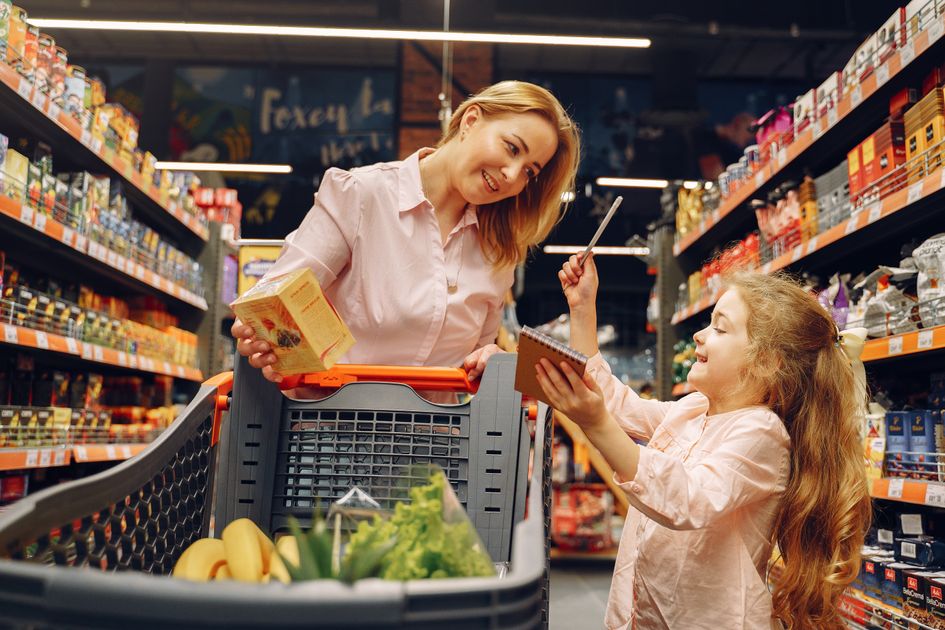
Photo: Kampus Production / Pexels
Before you write the list: check what's already in the kitchen
A grocery list starts in the kitchen, not in an app or on a notepad. Before writing a single item, open the fridge, freezer, and pantry. You'll find three cans of tomatoes you forgot about and no cooking oil. Or that the rice ran out on Tuesday — and you only find out Saturday night, standing at the stove.
That quick walkthrough does two things. First, it stops you from buying a duplicate of something you already have — more common than it sounds in a disorganized pantry. Second, it flags what's running low before it actually runs out, so you can restock without a last-minute scramble.
Keeping a pantry tracked in an app solves this automatically. The system already knows what you have, what's running low, and what disappeared. The shopping list builds from there instead of starting from a blank page.

Photo: novianadss / Pexels
The essential categories for a grocery list
A well-structured grocery list splits items into five groups. Each one roughly matches a section of the store. That cuts down on backtracking between aisles and lowers the odds of forgetting something once you're already in that part of the store.
Produce
- Garlic and onion — the base of most cooking, always on the list
- Tomatoes and a leafy green for the week (spinach, kale, or lettuce)
- Vegetables based on what you're cooking: zucchini, carrots, potatoes
- Routine fruit: bananas, apples, oranges
- Whatever's in season — it's cheaper and tastes better
Meat and protein
- Chicken or ground beef for the week's main meals
- Eggs — they keep, they're versatile, and they're the cheapest protein by far
- Fish, if it's part of your regular rotation
- A weekend cut of meat, kept separate from the weekly plan
Dairy
- Milk or a plant-based alternative
- Everyday cheese (cheddar, mozzarella, whatever gets used most)
- Butter or cream cheese
- Yogurt, if it's part of breakfast
Pantry staples
- Rice, beans, or grains — check what's left before buying more
- Pasta and a couple of dry goods for the back of the shelf
- Cooking oil, olive oil, and vinegar
- Spices that are running low: salt, pepper, garlic powder, paprika
- Backup canned goods: tomatoes, beans, corn
Household and personal care
- Paper towels and toilet paper — once you hit the halfway point of the pack
- Laundry detergent
- Dish soap and a fresh sponge
- All-purpose cleaner for the kitchen and bathroom
This same five-group split is what most grocery list templates use as a starting point. The difference here is the focus on sequence — what you grab first, and what you save for last.
A list connected to your pantry — so you never have to remember what ran out. That's what Mise does.
Start free →Shopping by aisle order saves real time
Most grocery stores follow a similar layout: produce near the entrance, meat and dairy along the walls or the back, pantry staples in the middle aisles, and household goods near checkout. When your list follows that order, you walk the store once and leave — no backtracking to the rice aisle after you've already hit the register.
The difference between a random list and one organized by aisle isn't just speed. It's discipline. Starting with produce, list in hand, makes it a lot harder to wander into the chip aisle "by accident." Every detour has a cost.
One rule that holds regardless of store layout: frozen food and ice cream go in the cart last, no matter where they're shelved. Anything that needs to stay cold should be the final thing you grab — especially on a longer drive home.
Five habits that keep the total from spiraling
The list handles the first half of the problem. The second half plays out inside the store.
- 1Never shop hungryObvious, and still true every time. Roughly half the unplanned items that land in a cart have a smell and a taste. Shop after a meal — any meal works.
- 2Compare unit price, not package priceA bigger package isn't automatically cheaper per ounce. When prices look close, the larger size usually wins — but check the shelf tag before it goes in the cart.
- 3Store brand on plain pantry and household basicsOn rice, beans, salt, sugar, and cleaning products, the quality gap between store brand and name brand is usually small. The price gap isn't.
- 4A deal only counts if you were already buying itThree boxes of crackers at half price is a good deal if you eat crackers. If you don't, it's double spending on something that expires before it gets used.
- 5Check the list before you get in lineThat moment where you're already at checkout and remember the fabric softener — easier to catch before the cart's closed out than after.
A complete grocery list isn't a guarantee of an organized kitchen. It's the starting point. The rest comes from the weekly meal plan — if you know what you're cooking, you know what you need to buy. The list is the consequence, not the cause.
A grocery list doesn't make you cook better. It just makes sure the rice is there when you actually need it.
Frequently asked questions about grocery lists
How do I organize a grocery list by category?
Split it into groups: produce, meat, dairy, pantry staples, and household and personal care. List only what your kitchen is actually out of before you leave. Organizing by category makes it easier to follow the store layout and cuts down on zigzagging between aisles.
What should be on a complete grocery list?
The core groups are: produce (vegetables, fruit, fresh herbs), meat and protein (chicken, ground beef, eggs), dairy (milk, cheese, butter), pantry staples (rice, pasta, oil, spices), and household basics (paper towels, dish soap, laundry detergent). Adjust quantities to household size.
How much money can a grocery list actually save?
The list itself is the biggest lever — impulse buys are estimated to account for well over half of total grocery spend. Beyond that: never shop hungry, compare unit price, buy store brand on plain staples, and only take a deal on something you were already going to buy.
What's the best order to shop a grocery list?
Follow the store layout: produce first (near the entrance), then meat and deli, dairy, pantry staples, and household last. Frozen items always go in the cart last, no matter where they're shelved, so nothing thaws before checkout.
How often should I make a grocery list?
It depends on household size and storage space. Most people do best with one full weekly shop built around a list, plus a quick mid-week stop for fresh produce that doesn't keep as long.
Paper list or phone app — which works better?
Paper works fine if you always shop the same store and know the layout by heart. A phone never gets left on the counter, can be shared in real time, and is easy to update mid-week. A dedicated grocery list app goes further — it skips the part where you're digging through a group chat for what someone asked for.
The list, ready before you even leave the house.
That's Mise.
Connects your pantry, weekly meal plan, and shopping list in one place. You know what you have, plan what you're cooking, and the list builds itself.