
Why most people spend more than they should at the grocery store
Research tracking roughly 30,000 grocery purchases found that unplanned items make up 68% of what people buy on a big shopping trip and 54% on a smaller one (Inman, Winer & Ferraro, published via Wharton). Separate industry surveys put the share of shoppers who make at least one impulse purchase per visit somewhere between 20% and 50%. However you slice it, the pattern is the same: most of what ends up in the cart wasn't decided at home.
That shows up as real money. Every item you didn't plan for is either something you'll actually use eventually (fine, but you paid for storage and shelf space you didn't need to) or something that ends up forgotten in the back of the fridge. The USDA estimates that food loss at the retail and consumer level runs around 31% of the supply — and a meaningful share of that starts with buying something without a plan for it.
The problem isn't a lack of willpower. It's a lack of system. Grocery shopping without a plan is like shopping with your eyes closed — you get somewhere, but the path is crooked and the cart is full of surprises.
And there's more to it: every extra trip to the store is another exposure to retail merchandising — endcap displays, comparative pricing, products placed at eye level, all engineered to raise the average basket size. Shopping less often with a complete list is, on its own, a defense against that.
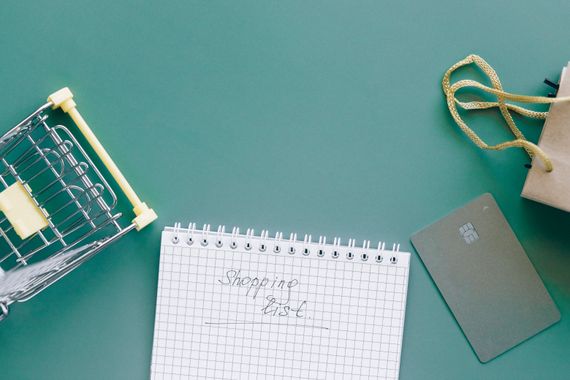
Photo: Nataliya Vaitkevich / Pexels
Before you leave the house: where the savings start
Most grocery-saving advice focuses on what to do inside the store. But most of the money you save gets decided before you ever leave home.
1. Check the pantry before you write the list
It sounds obvious, but almost nobody does it. Open every cabinet, check the fridge and the freezer before you sit down to write the list. You'll find two cans of tomato paste, two weeks' worth of rice, and that cheese that's still perfectly fine. Buying duplicates is the quietest form of waste there is. If your pantry is a mess to begin with, it's worth sorting it out first — grouping like items, labeling what you can, and giving everything a spot you'll actually remember.
2. Plan the week's meals before you go
Without knowing what you're cooking, the list is a guess. You end up buying proteins with no plan for them, vegetables that don't match anything else you bought, and still order delivery on Wednesday anyway.
Spending 10 minutes picking 5 to 7 meals for the week turns the list into something precise: you know exactly which ingredients you need and how much of each. The Mise weekly meal plan does this automatically — you pick the recipes and the app builds the list of what you're missing.
3. Build the list by group, not by memory
A list organized by group (produce, meat, dairy, pantry staples, cleaning, personal care) covers every aisle without leaving gaps. When you write from memory, you forget entire categories — and end up making a second trip mid-week. If you need somewhere to start, keeping a running master list of your household staples saves you from rebuilding it from scratch every time.
4. Set a budget before you go
Knowing how much you're going to spend changes what goes on the list. With a budget set, you prioritize: the week's protein stays, the specialty yogurt waits for another trip. Without one, everything feels necessary in the moment.
5. Don't shop hungry
A classic because it's real. When you're hungry, everything feels urgent and necessary. You grab the chips on sale, the candy bar in the checkout line, the frozen pizza "just this once." Eat before you go.
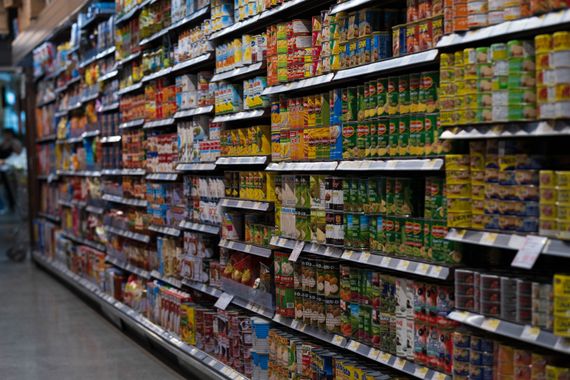
Photo: ha ha / Pexels
Inside the store: habits that cut the bill
6. Follow the list, not the aisle
Grocery stores are laid out to make you walk through every aisle. Staples like milk, eggs, and bread sit at the back so you pass everything else before you get there. If it's not on the list, don't walk down the aisle. Every aisle is another chance for an impulse buy.
7. Compare unit price, not package price
The 12 oz bag looks cheaper than the 32 oz one, but the unit price almost always contradicts that instinct. Most US supermarkets are required to display the price per unit of measure (per ounce, per pound, per liter) on the shelf tag. Use that number — it's already there.
8. Skip endcaps and special displays
An endcap display isn't necessarily a deal. That space is sold to brands for visibility. Before grabbing something staged at the end of an aisle, compare it against the equivalent product sitting on the regular shelf in its actual category.
9. Choose store brands for commodities
Rice, flour, sugar, salt, dish soap: items with no real difference in taste or performance. Store brands are typically 20–40% cheaper and often come off the same production lines as the name brand. Save where you genuinely won't notice a difference.
10. Don't buy something unplanned just because it's on sale
A deal is only a saving if you were going to buy it anyway. Buying three jars of sauce because they're discounted, when you go through one a month, means spending money now that you would have spent months later — with none of the real financial upside of having kept that cash available in the meantime.
Fewer decisions. More cooking.
Start free →The grocery list that actually works
A good grocery list has three traits: it's organized by group (so you never backtrack down an aisle), it's based on the week's meal plan (so you only buy what you'll use), and it reflects what's already at home (so you don't buy duplicates).
The most efficient format isn't a flat list of items — it's a list organized aisle by aisle. You hit produce, check everything off, move to meat, then dairy, then pantry staples. No backtracking. No forgotten item forcing a second trip.
The Mise shopping list already groups items by aisle automatically. You add what you need, the app sorts it by category, and you get out of the store faster — and stay on budget.
11. Shop once a week, not several times
Every trip to the store has a hidden cost beyond the cart itself: time, travel, and above all, exposure to more opportunities for unplanned purchases. Someone who runs to the store three times a week "just to grab a few things" tends to spend more overall than someone who goes once with a complete list.
12. Review the list afterward, not during
After you check out, look at what's left unchecked on the list (what you couldn't find or decided to skip) and what landed in the cart that wasn't on the list at all. That two-minute review reveals patterns: what you forget every week, what you buy on impulse every time, where your budget keeps slipping.

Photo: Polina Tankilevitch / Pexels
List, pantry, and meal plan: where the biggest savings live
Each of these habits helps on its own. But the real financial upside shows up when all three are connected.
Here's how it works: you plan the week's meals based on what's already in the pantry. Whatever's missing goes to the list automatically. At the store, you buy only those items. Back home, you update the pantry. When something runs out, you flag it — not on shopping day, once memory has already failed you, but the moment you notice.
That loop eliminates the two biggest culprits behind overspending: buying something you already had (because you didn't know you had it) and not buying something you needed (because it never made it onto the list). The Mise pantry works as an inventory connected to the list — you know what you have without opening every cabinet to check.
In practice, people who combine all three tend to spend less not because they're buying cheaper products, but because they're buying what they'll genuinely use. Nothing expiring in the back of the fridge. No mid-week second trip to grab what got forgotten.
How much you can actually save
The USDA publishes monthly food plan costs for a family of four at different spending levels — from the Thrifty Plan (around $1,000–$1,100) up to the Moderate Plan (around $1,350–$1,400). The gap between the tightest, most planned budget and a more relaxed one runs roughly $100 to $350 a month — a useful proxy for what better planning alone can realistically move.
It isn't an abstract projection. It's the cost of the handful of unplanned items on every trip, of buying duplicates because the pantry wasn't checked, of a second trip because something essential got forgotten, of throwing out food that went bad before it got used. The USDA estimates the average American family of four loses about $1,500 a year to food that never gets eaten — money spent and then thrown in the trash.
A family that shops without any real plan can realistically trim a meaningful slice of that with a fixed list, a weekly meal plan, and an organized pantry. The difference doesn't come from switching stores or cutting entire categories — it comes from buying, with precision, only what actually gets used.
Frequently asked questions about saving money on groceries
How can I save money on groceries in practical terms?
The savings start at home: check the pantry before building the list, plan the week's meals, and write everything organized by aisle group. Inside the store, eat before you go, stick to the list, and compare unit price — not package price. Shoppers who plan ahead consistently spend less than shoppers who don't.
How much can I actually save per month by using a grocery list?
It depends on your current habits and household size, but unplanned purchases make up more than half of what people buy on a typical trip. Cutting duplicates, impulse buys, and wasted food can realistically save a household $50 to $150 a month — in the same range as the gap between the USDA's Thrifty and Low-Cost food plans.
Is it cheaper to grocery shop once a week or several times?
Once a week with a complete list is cheaper. Every extra trip is another exposure to retail merchandising — and another opportunity for an impulse buy. Shoppers who consolidate their trips tend to spend less overall.
What can I do to stay within my grocery budget?
Set the budget before building the list. Plan meals first, then list only what's missing. Check the pantry before writing anything down. At the store, stick to the list and skip aisles that aren't on your route.
How do I avoid food waste and save money at the same time?
The biggest driver of household food waste is buying without knowing what you already have. With an organized pantry connected to the list, you buy only what you'll use. The USDA estimates the average American family of four loses about $1,500 a year to uneaten food — and a lot of that starts at the store.
What's the difference between unit price and package price?
The price on the shelf tag is usually per package. The unit price — per ounce, pound, or liter — is what lets you compare brands and sizes fairly. The smaller package often looks cheaper, but the unit price is almost always higher. Most stores are required to post it — look for it before choosing between two options.
Stop winging it at the store.
Use Mise.
Shopping list, pantry, and weekly meal plan in one place. You decide what to cook, the app builds the list of what's missing.