Photo: Eva Bronzini / Pexels
What is cardamom
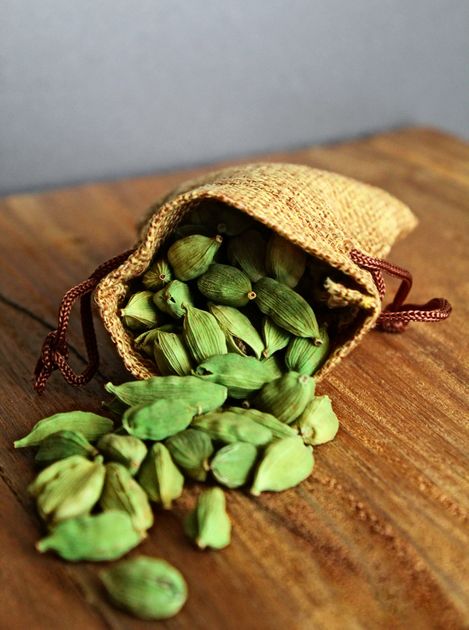
Cardamom (Elettaria cardamomum) is a plant in the same family as ginger and turmeric. What ends up in the kitchen are the pods — small, oval, about a half-inch long — holding aromatic seeds inside. The seeds are where the real fragrance lives. The husk keeps that aroma sealed in until the pod is cracked open.
It is often called the third most expensive spice in the world, behind only saffron and vanilla. The price is not arbitrary: the plant takes 3 to 4 years before it starts producing, the pods are picked by hand one at a time, and the essential oils responsible for the smell are volatile. Any misstep in drying or processing and the cardamom that reaches the shelf is flat and forgettable.
India grew nearly all the world's cardamom for most of history, but Guatemala has quietly overtaken it — introduced there in the early 1900s, cardamom now grows so well in the country's highlands that Guatemala exports more of it than any other nation, most of it headed to the Middle East, where demand for cardamom-spiced coffee is enormous.
The aroma itself is hard to describe without overselling it. Floral, slightly citrusy, with notes of eucalyptus and a sweetness that does not show up in any other spice. There is no clean substitute — anyone who has made tea with real cardamom knows that ginger and cinnamon, however close on paper, just are not the same thing.
Green vs black: what's the difference
The two share a name and a family, which is exactly why people mix them up. They are different plants with different jobs in the kitchen.
Green cardamom
The one you will find almost everywhere. Small, with a thin, pale green husk and dark seeds inside. Floral and citrusy — it is the backbone of Indian chai, Arabic coffee, Middle Eastern sweets, and Scandinavian holiday baking, including the cardamom buns (kardemummabullar) that show up in every Swedish bakery. It is the cardamom you will find at a regular grocery store without hunting for a specialty shop.
Black cardamom
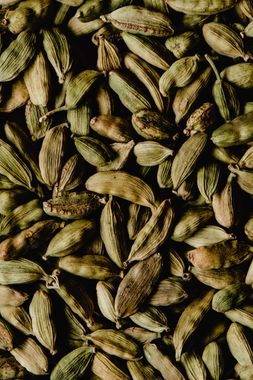
Bigger, darker, with a rough, dried-out husk. The aroma is a completely different animal: smoky, earthy, with notes that lean toward tar and campfire. It belongs in hearty savory dishes — biryanis, meat stews, dense curries. Do not swap one for the other: black cardamom in a recipe written for green is going to taste wrong, not just different.
Black cardamom is harder to find outside Indian and Middle Eastern grocers, though it shows up online easily enough. If a recipe just says "cardamom" with no qualifier, assume it means green.
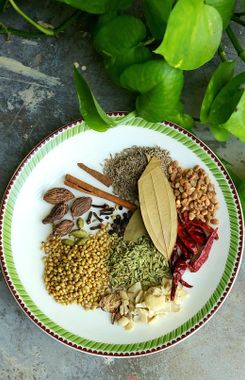
Photo: Suvaiba / Pexels
What cardamom is used for in the kitchen
Cardamom is built to add fragrance without taking over. A good spice does not dominate a dish — it deepens it. That is exactly what cardamom does: it adds a layer of aroma you notice before you can name it.
Coffee and tea
The most direct use, and the one most people run into first. Two or three crushed pods steeped in hot water with ginger and cinnamon make a chai that a tea bag cannot compete with. Classic Indian chai leans on it. So does Arabic coffee (qahwa), where a pod is often ground right into the grounds before brewing. If you have never had coffee with a cardamom pod dropped in, it is worth trying once.
Rice and curry dishes
In Indian and Middle Eastern cooking, whole pods go straight into hot oil with cinnamon and cloves before the rice goes in — the result is rice with enough aroma that it does not need a sauce to feel finished. In curry dishes, ground cardamom is one of the base spices in a masala blend, alongside coriander, cumin, and chili.
Baking and desserts
In Scandinavia, cardamom is the default spice for holiday and everyday baking — the way cinnamon works in the US, but more floral. Swedish cardamom buns are a bakery staple. In Middle Eastern cooking, it shows up in baklava, rice pudding, and custards. In South Asia, it flavors kheer (rice pudding) and sweets made with condensed milk.
Meat and marinades
Less obvious, but it works. In chicken and lamb marinades, cardamom adds depth without adding bitterness. It pairs well with yogurt, garlic, and cumin — a classic base for Lebanese-style roasted chicken. It also turns up in meatballs and kofta as part of the spice mix.
An organized pantry is half the work. Mise handles the other half.
Start free →Health benefits of cardamom
Cardamom carries antioxidant compounds — flavonoids, terpenes, and essential oils like cineole. Existing research links regular consumption to a handful of concrete effects.
Digestion
Cardamom stimulates the production of digestive enzymes and has a carminative effect — it helps reduce gas and bloating. That is why it has shown up in after-meal teas in Ayurvedic medicine for centuries. The scientific evidence is still early-stage but consistent: it works as a digestive aid, not a cure.
Oral health
The essential oils in cardamom have antibacterial properties. In parts of the Middle East, chewing a pod after a meal is a common habit — an aromatic, low-tech version of mouthwash. Cineole, the main compound behind the aroma, is part of why that works. It is also why cardamom appears in some digestive teas and in garlic-heavy Indian recipes meant to cut lingering breath.
Antioxidants
Like most intensely aromatic spices — oregano, turmeric, cloves — cardamom is rich in antioxidant compounds. Regular spice use in general correlates with a more varied diet and less reliance on salt and sugar to make food taste like something. That might be the most practical benefit of all.
One honest caveat: cardamom is a spice, not a supplement. The amount used in a typical recipe is too small to have a measurable clinical effect on its own. The real benefit is that it adds flavor to dishes that would otherwise need more salt or sugar to taste interesting.
How to use cardamom: pods, powder, and tea
Whole pods
Lightly crush the pod with the side of a knife before using it — that cracks the husk and releases more aroma. Add it whole to tea, stock, rice, and marinades. Fish it out before serving: the husk itself is not pleasant to eat. The aroma left behind in the liquid is enough to change the whole dish.
Ground cardamom
More practical for cake batter, cookies, and dry spice blends. Use it sparingly — 1/4 teaspoon is plenty for an 8-serving cake recipe. Ground cardamom loses its aroma faster than whole pods: after 6 to 8 months, the flavor drops off noticeably. If you have a mortar and pestle, buying whole and grinding right before use is the best of both worlds.
Reference ratios
For tea: 2 to 3 crushed pods per 2 cups of water. For rice: 3 to 4 pods per 4 servings. For cake: 1/4 to 1/2 teaspoon of ground cardamom per recipe. Cardamom is strong — start with less. Overdo it and the flavor turns medicinal and takes over the whole dish. The difference is easy to taste.
Cardamom is also one of those spices where the recipe calls for "2 pods" and the bag you bought has 50 in it. They will sit in your pantry for two years. But at the right moment, they will save the dish — and you will be glad you had them.
How to store cardamom and where to buy it
How to store it
In an airtight container, away from light, heat, and moisture. Never store it near the stove — heat evaporates the essential oils that carry the aroma in the first place. Whole pods, stored well, keep for up to 2 years without losing quality. Ground cardamom starts fading after 6 to 8 months. If you bought a bulk amount, the freezer works well for the extra — it holds the aroma longer.
It is worth logging what you have and when you bought it in a pantry tracker. Old spices do not spoil, they just go flat. Without some kind of system, the same pod ends up buried at the bottom of three different jars.
Where to buy it
Larger grocery stores carry green cardamom, ground or whole, in the spice aisle. Middle Eastern, Indian, and Scandinavian specialty grocers usually sell it in bulk — cheaper per gram, and with faster turnover, which means fresher stock. Spice shops focused on international cooking tend to carry both types, green and black, as whole pods.
Online, the selection is wider — including single-origin and organic options. If you buy online, check whether the seller lists a harvest date: old spice sold as fresh is a more common problem than people expect. The same attention you would give any item on a shopping list applies here — knowing exactly what you are buying before you commit makes a real difference.
Frequently asked questions about cardamom
Are green and black cardamom the same thing?
No. They are different plants in the same family. Green cardamom has a floral, citrusy aroma — used in tea, desserts, and curry dishes. Black cardamom has a smoky, earthy aroma — used in hearty savory dishes. Green is the one you will find easily in most stores. If a recipe does not specify, assume green.
Can you substitute cardamom with another spice?
There is no direct substitute — the aroma is unique. In a pinch, a pinch of ground ginger mixed with a pinch of nutmeg gets you closer, but the result is different. For dishes where cardamom is the star, no substitute closes the gap completely.
Ground cardamom or whole pods: which should you use?
Whole pods carry a stronger, longer-lasting aroma. Ideal for tea, stock, and rice. Ground is more practical for cake batter and dry spice mixes, but it loses aroma after 6 to 8 months. Buying whole pods and grinding just before use gets you the best of both.
Where can you buy cardamom?
Grocery stores, Middle Eastern and Indian markets, Scandinavian specialty shops, and online retailers. Buying in bulk from a specialty grocer is usually cheaper and fresher than a small jar that has been sitting on a supermarket shelf.
How do you store cardamom at home?
In an airtight container, away from light, heat, and moisture. Never near the stove. Whole pods keep for up to 2 years stored well. Ground cardamom fades after 6 to 8 months. If you bought a bulk amount, freeze the extra to hold the aroma longer.
How much cardamom should you use in a recipe?
Use it with restraint: 2 to 3 pods for 2 cups of tea; 3 to 4 pods for a 4-serving rice dish; 1/4 to 1/2 teaspoon ground per cake recipe. Cardamom is strong. Start with less — you can always add more, but you cannot pull the excess back out.
Know what's in the pantry.
Let Mise handle the rest.
Mise connects your pantry, recipes, and shopping list in one place. You buy what you'll actually use — and the cardamom does not disappear at the bottom of three jars.