What makes red onion different
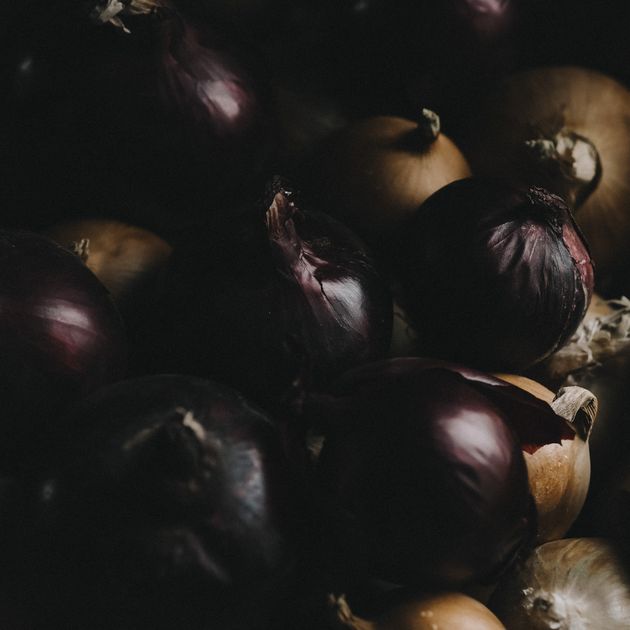
Red onion is not just a cosmetic variation on the yellow kind. The color comes from anthocyanins — the same pigments that make blueberries blue and red cabbage purple. Color and nutrition are connected here: the deeper the color, the higher the concentration of antioxidants.
Yellow onion has quercetin too, just at a lower concentration, and it does not carry meaningful anthocyanins. Both are nutritious vegetables, but the phytochemical profile is different — and that difference matters depending on how you plan to use it.
In the kitchen, red onion tastes milder raw. Yellow onion is sharper and works better cooked down in a sauté. Red holds up to heat fine, but loses a chunk of its vivid color during cooking — and part of the anthocyanins go with it.
The practical rule: red onion raw in salads, vinaigrettes, and quick pickles. Yellow onion for sautéing, stews, and building a base for sauces. Both earn a spot in the pantry — just for different jobs.

Photo: Pexels
What's inside: the nutrients
A hundred grams of raw red onion has roughly 40 calories, 9g of carbs, 1.7g of fiber, and 1g of protein. For comparison: a slice of sandwich bread weighs about the same and packs more than double the calories.
Vitamin C is present in a meaningful amount — about 9% of the daily recommendation per 100g. It also has potassium, folate, and vitamin B6 in smaller amounts. Sodium is negligible.
What does not show up on a standard nutrition label are the phytochemicals: anthocyanins and quercetin. These two compounds are the main reason red onion draws more research attention than yellow. It is not the macronutrient breakdown that sets it apart — it is what comes along with it.
The quercetin in onion is unusually well absorbed by the body. Studies show absorption rates higher than from other plant sources, like tea. It is not a supplement that changes the equation — it is the onion from the regular grocery run, raw, in Thursday night's vinaigrette.
The main benefits of red onion
The documented benefits line up with what is known about anthocyanins and quercetin more broadly. None of them show up from a single meal — they build with regular intake over time.
Antioxidant activity
Anthocyanins neutralize free radicals — unstable molecules that contribute to cellular aging and chronic disease. Regular intake of anthocyanin-rich foods is linked to lower cardiovascular and metabolic risk in long-term studies.
Anti-inflammatory effect
Quercetin is one of the most studied anti-inflammatory compounds in food. In clinical trials, it shows a measurable reduction in inflammatory markers compared to placebo. It is not anti-inflammatory the way a medication is — the effect is preventive and cumulative.
Cardiovascular health
Controlled studies show that regular onion consumption can contribute to lower LDL (the "bad" cholesterol) and support healthy blood pressure. The likely mechanism involves flavonoids — quercetin in particular — and their effect on cholesterol oxidation.
Prebiotic effect
Onion contains fructooligosaccharides (FOS) — fibers the body does not digest that instead feed beneficial gut bacteria. With regular intake, they support a more diverse gut microbiome, which is linked to immunity and metabolism.
Immunity and bone health
Vitamin C supports the immune system. Quercetin has shown, in lab studies, potential to reduce the activity of osteoclasts — the cells that break down bone tissue. Human trials are still limited, but it is one of the active research areas around onion.
Raw or cooked: what changes
Anthocyanins are heat-sensitive. A long sauté or a soup simmering for 20 minutes destroys a significant share of them. Quercetin is more resilient and survives moderate heat. Fiber is not affected by cooking at all.
That does not mean cooked red onion is a waste. It still has fiber, some vitamin C, quercetin, and minerals. But if the goal is to get the full benefit of the anthocyanins, raw is the answer.
- For maximum antioxidants → raw red onion in a salad, or dressed with lime
- To mellow the sharpness without losing nutrients → a quick 5-minute vinegar marinade
- For sautéing and building a sauce base → yellow onion does the job just as well, for less
The distinction matters because it changes what you buy. If you are only picking up red onion to sauté, you are paying more for something that will lose its main advantage the moment it hits the pan. It makes more sense to keep both on the shopping list and use each where it actually earns its place.
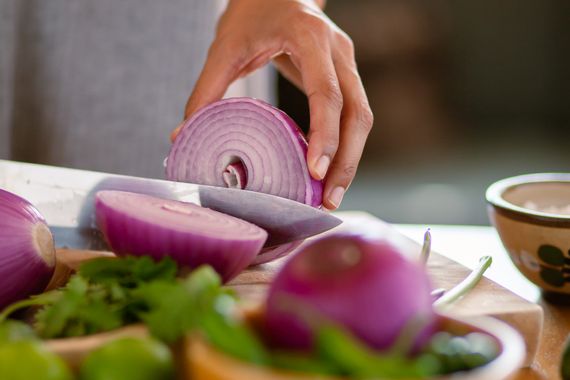
Photo: Los Muertos Crew / Pexels
How to use red onion in the kitchen
The obvious use is salad — but red onion earns more space than that in everyday cooking.
Quick vinaigrette
Thinly sliced red onion with lime, olive oil, and salt. Let it sit for 10 minutes. It comes out different from a vinaigrette made with yellow onion — milder, with more vivid color. Works spooned over rice and beans, grilled chicken, or tacos.
Quick-pickled
Red onion with apple cider vinegar, salt, a pinch of sugar, and hot water. Rest in the fridge for 30 minutes. Goes on burgers, scrambled eggs, and sandwiches. Keeps for up to a week and changes the flavor of whatever it lands on.
Raw in bean and grain salads
Lentils, chickpeas, black-eyed peas. Thin raw red onion holds up to the weight of the grains and adds crunch. If the sharpness bothers you, a 10-minute ice water soak fixes it — the color comes out even more vivid afterward.
Caramelized
Heat destroys the anthocyanins, but caramelized red onion has a different flavor from yellow — sweeter, with color that shifts from purple to golden brown. On sandwiches, with cheese, folded into pasta. If you are already caramelizing onion anyway, red works just as well.
In guacamole and dips
Finely diced, it stands in for white onion without the sharp bite. In hummus, bean dips, and yogurt-based sauces — red onion blends in without taking over the flavor.
An organized pantry is half the work. Mise handles the other half.
Start free →How to choose and store red onion
When buying, a good red onion is firm to the touch. No soft spots, no shriveled look, skin intact with no dark blemishes. Medium size is more practical than large — less waste per use.
Storing it whole is simple: a cool, dry place with good airflow. Do not refrigerate it whole — cold and humidity speed up wilting. Keep it away from potatoes, which release ethylene and interfere with how both ripen.
Cut it and only used half? Fridge, in a sealed container. It keeps for 3 to 5 days. Do not let it sit in direct contact with delicate-flavored food — onion carries its aroma to whatever is nearby.
Red onion is one of the easiest vegetables to keep track of in an organized pantry — you notice it running low before it actually runs out. Unlike garlic, which disappears without a trace and only gets missed once you are already standing at the stove.
Frequently asked questions about red onion
Is red onion healthier than yellow onion?
Yes, in terms of antioxidants. Red onion has anthocyanins — compounds that give it its color and carry documented antioxidant and anti-inflammatory activity — that yellow onion does not have in meaningful amounts. Eaten raw, red comes out ahead. In long-cooked dishes, the gap narrows because heat destroys part of the anthocyanins.
What are the main health benefits of red onion?
The best-documented benefits are: antioxidant activity (from anthocyanins and quercetin), an anti-inflammatory effect, support for cardiovascular health, a prebiotic effect (fiber that feeds beneficial gut bacteria), and an immune boost from vitamin C. The effects are cumulative and depend on regular intake.
Does cooking red onion destroy the antioxidants?
Partially. Anthocyanins are heat-sensitive, and a significant share breaks down during long cooking. Quercetin is more stable and survives moderate heat. Fiber is not affected by heat. To get the full benefit, eat it raw or quick-pickled.
How much red onion can you eat per day?
There is no official limit. Half a medium onion (about 50g) per meal already delivers a meaningful amount of quercetin and anthocyanins. The benefits build up over time — regular intake matters more than the amount in any single sitting. People sensitive to FODMAPs may feel bloated with large raw portions.
Is red onion good for gut health?
Yes. Red onion contains fructooligosaccharides (FOS), prebiotic fibers that feed beneficial gut bacteria. With regular intake, it supports a more diverse gut microbiome. The caveat: people sensitive to FODMAPs may experience bloating and gas, especially with large amounts of raw onion.
How do you take the bite out of raw red onion?
Two methods work. First: soak the sliced onion in ice water for 10 to 15 minutes — the sharpness drops noticeably without losing crunch. Second: toss it with lime or vinegar and let it sit for 5 minutes — the acidity mellows the flavor. Both preserve the color and most of the nutrients.
Know what's in the pantry.
Let Mise handle the rest.
Mise connects your pantry, recipes, and shopping list in one place. You buy what you'll actually use — and the red onion makes the list before it runs out.