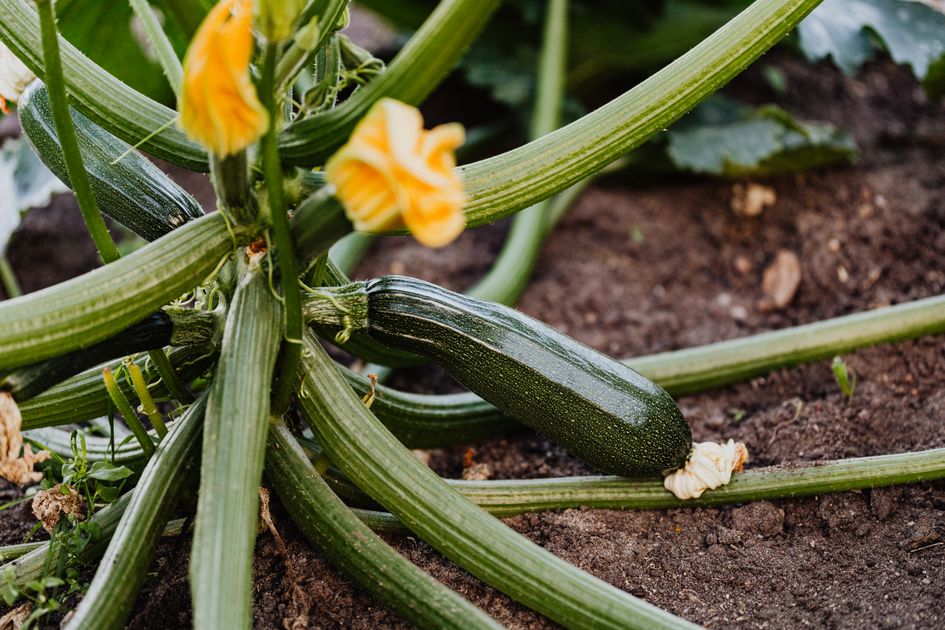
Zucchini has 17 calories per 100 grams. That puts it among the lightest vegetables you can buy — right up there with cucumber and lettuce. The low calorie count isn't the only reason it's worth stocking: it's the combination of water, fiber, and vitamins that makes zucchini earn its spot in the pantry week after week.
It's cheap, cooks fast, and fits into nearly any recipe — sautéed, grilled, roasted, raw in a salad, or spiralized into noodles. It's the kind of vegetable that does more work than it gets credit for.
How many calories are in zucchini
Raw zucchini has about 17 calories per 100g, according to USDA FoodData Central. Cooked, the number barely moves — closer to 18 calories per 100g — because zucchini absorbs a little water as it cooks rather than losing volume.
A medium zucchini runs about 200g. Raw, that's roughly 34 calories. A 150g serving sautéed with garlic and salt lands around 27 calories.
What actually moves the number is what goes in the pan with it:
- Raw zucchini (100g): ~17 cal
- Cooked zucchini (100g): ~18 cal
- Sautéed with 1 tbsp olive oil (100g + 5ml oil): ~57 cal
- Baked with mozzarella (100g + 20g cheese): ~95 cal
Zucchini on its own doesn't add up to much. What adds up is the cooking method — and that's easy to control.
Zucchini nutrition facts table
Values per 100g of raw zucchini, skin on, based on USDA data:
- Calories: 17 kcal
- Carbohydrates: 3.1g
- Fiber: 1g
- Protein: 1.2g
- Total fat: 0.3g
- Water: ~95g
- Vitamin C: ~18mg (about 20% of the daily recommended value)
- Potassium: ~261mg
- Folate: ~24mcg
Ninety-five percent water. That's the whole story behind why zucchini has so few calories — and why it fills you up without weighing much on the plate.
Most of the fiber sits in the skin. Eating it unpeeled makes a real difference for digestion.

Photo: Polina Tankilevitch / Pexels
Health benefits of zucchini
Zucchini isn't a superfood. It's just a genuinely good vegetable — and that distinction matters if you actually cook.
Fills you up without the calories. At 95% water, zucchini takes up real space in your stomach without adding meaningful calories. It bulks up a meal without bulking up the calorie count.
Keeps digestion moving. The fiber in the skin helps with regularity. If you tend toward constipation, eating zucchini with the skin on — sliced or raw — regularly makes a difference.
Easy on the stomach. Cooked zucchini is gentle to digest. It works well in light meals when your stomach is sensitive, like during a gastritis flare-up. Just go easy on the oil.
Vitamin C and antioxidants. 100g of zucchini delivers about 18mg of vitamin C — close to 20% of the daily recommended value. The green skin also carries beta-carotene, a precursor to vitamin A. Zucchini is consistently listed among the reference vegetables in USDA nutrient databases for its antioxidant content.
Potassium for blood pressure. With around 261mg of potassium per 100g, zucchini helps balance out sodium in your diet. That matters if you eat a lot of salt — which is most of us.
Zucchini makes the list almost every week, but it's easy to forget to buy it when the whole pantry lives in your head. Mise remembers for you.
Start free →Types of zucchini and summer squash
Not all summer squash is the same. What you find at the store varies more than most people notice — and it's worth knowing the difference before you pick.
- Green zucchini: the most common at any grocery store. Dark green, cylindrical, neutral flavor. Good for sautéing, grilling, and spiralizing into zucchini noodles.
- Yellow summer squash: same shape as zucchini, bright yellow skin, slightly sweeter and more delicate flesh. Works well roasted or stuffed.
- Round zucchini (eight ball): a smaller, rounder variety, great for stuffing and baking whole. Less common but shows up at farmers markets.
- Pattypan squash: scalloped-edge, disc-shaped. Firmer texture, common in stews and roasted vegetable mixes.
Zucchini grows fast — anyone with a backyard garden knows the drill: plant one seedling, and two weeks later you have more than you can possibly use, handing bags of it off to neighbors.
For everyday cooking, green zucchini and yellow squash are the easiest to find and the most interchangeable. The nutritional difference between them is minimal — pick based on the recipe or the price.
How to pick a good zucchini at the store
A soft zucchini is an old zucchini. Sounds obvious, but it's easy to miss when you're moving fast through the produce aisle.
- Firm to the touch: press lightly with your thumb. It shouldn't give. If it dents easily, it's past its prime.
- Smooth, unblemished skin: skip anything with dark spots or a wrinkled surface.
- Medium size: oversized zucchini tends to be watery and bland. Ones in the 6–8 inch range are the most versatile.
- Moist, green stem: a stem that isn't dried out is a sign it was picked recently.
A good zucchini doesn't need heavy seasoning to taste good. An old one won't be saved by seasoning, no matter how much you use.
It's worth checking the shopping list before you leave the house and noting how many zucchini you actually need for the week. That way you don't overbuy and find two shriveled ones in the crisper drawer come Thursday.
How to store zucchini at home
Zucchini doesn't hold up long at room temperature, especially in warm weather. The basics:
- Whole, in the fridge: in the crisper drawer, it keeps for 5 to 7 days. No need to wrap it.
- Cut, in the fridge: store in a sealed container or wrap tightly in plastic. Use within 3 days.
- In the freezer: blanch it for 2 minutes in boiling water, dry it well, and freeze in a bag. It keeps for up to 3 months. The texture softens after thawing, but it still works well in soups and sautés.
Don't wash it before storing — wash right before you cook. Moisture speeds up spoilage.
If you tend to lose track of what's in the fridge, the Mise pantry helps you log what needs to get used soon — so you're not discovering a shriveled zucchini three days after you bought it.
A simple approach: buy two zucchini a week and decide upfront which day each one gets used. A weekly meal plan works well for this — you set the menu before you shop and buy exactly what you'll use. No waste, and no buying a vegetable you already have sitting in the fridge.
For comparison: spinach has a similarly light nutrition profile (about 23 calories per 100g) and tends to land in the same week's grocery run. Together, the two make a solid base of leafy greens for the week.
Frequently asked questions about zucchini
How many calories are in a whole zucchini?
A medium zucchini (about 200g) has roughly 34 calories raw. A small one (100g) has about 17 calories. The exact number shifts a little by variety, but most zucchini falls in the 15–20 calorie range per 100g.
Is zucchini a carb or a protein?
Neither in any meaningful amount. Per 100g, it has about 3g of carbs and 1.2g of protein. It's mostly water — around 95%. That makes it a common pick in low-carb and keto eating.
Does zucchini make you gain weight?
At 17 calories per 100g, it's unlikely to be the reason. What adds up the calories is what you cook it with — olive oil, butter, cheese. Zucchini itself has such a low calorie impact that it more often helps with weight management than works against it.
Can you eat zucchini raw?
Yes. Raw, it has a crisp texture and mild flavor. It works well thinly sliced in salads or spiralized into "noodles." Cooking reduces the vitamin C content slightly, but it doesn't change the overall nutrition profile much.
What is the difference between zucchini and yellow squash?
Zucchini is dark green and cylindrical with a mild, neutral flavor. Yellow summer squash has the same shape but a bright yellow skin and a slightly sweeter taste. Nutritionally, they're nearly identical — pick either one based on the recipe.
How do you store zucchini in the fridge?
Whole, in the crisper drawer, it keeps for up to 7 days. Cut, store it in a sealed container and use within 3 days. No need to wash it before storing — wash right before you cook.
Is zucchini gluten-free?
Yes. Zucchini is naturally gluten-free and can be eaten without restriction by people with celiac disease or gluten sensitivity.
Zucchini in the pantry,
without forgetting to buy it.
Mise connects your shopping list, pantry, and weekly meal plan. You buy what you'll actually use — and the zucchini doesn't go soft in the back of the drawer.